

For a long time, you may have believed that asking for help would mean putting your life on hold.
You pictured taking weeks away from work, explaining your absence to coworkers, or sacrificing the paycheck you depend on.
So instead, you kept showing up.
You smiled through meetings.
You answered emails.
You met deadlines.
Then you went home completely drained, wondering how long you could keep pretending everything was fine.
If you’ve searched for evening mental health support because you don’t want anxiety to cost you your career, you’re far from alone.
Many people who reach out to Waterside Behavioral Health aren’t looking to step away from life—they’re looking for a way to feel better while continuing to live it.
If you’re beginning to explore mental health treatment in Massachusetts, here’s how to find support that works around your schedule instead of forcing your schedule to revolve around treatment.
Step 1: Stop Believing You Have to Hit Rock Bottom
One of the biggest myths about anxiety treatment is that you have to be completely overwhelmed before asking for help.
In reality, many people seek support while they’re still working full-time, caring for their families, and managing everyday responsibilities.
From the outside, they appear successful.
Inside, they’re exhausted.
Maybe you’ve started avoiding social situations because they feel overwhelming.
Maybe your heart races before every meeting.
Maybe Sunday afternoons are spent dreading Monday morning.
These experiences deserve attention long before they become a crisis.
Seeking help early often makes recovery smoother because you’re addressing the problem before it has a chance to grow.
Step 2: Decide What You Actually Need
Many people begin their search by typing something very practical into Google.
They aren’t searching for complicated clinical terms.
They’re searching for care that fits their real life.
Can I go after work?
Will I still be able to keep my job?
Can I attend treatment without everyone knowing?
Those are reasonable questions.
If you’re looking for an outpatient anxiety program MA, flexibility may matter just as much as the therapy itself.
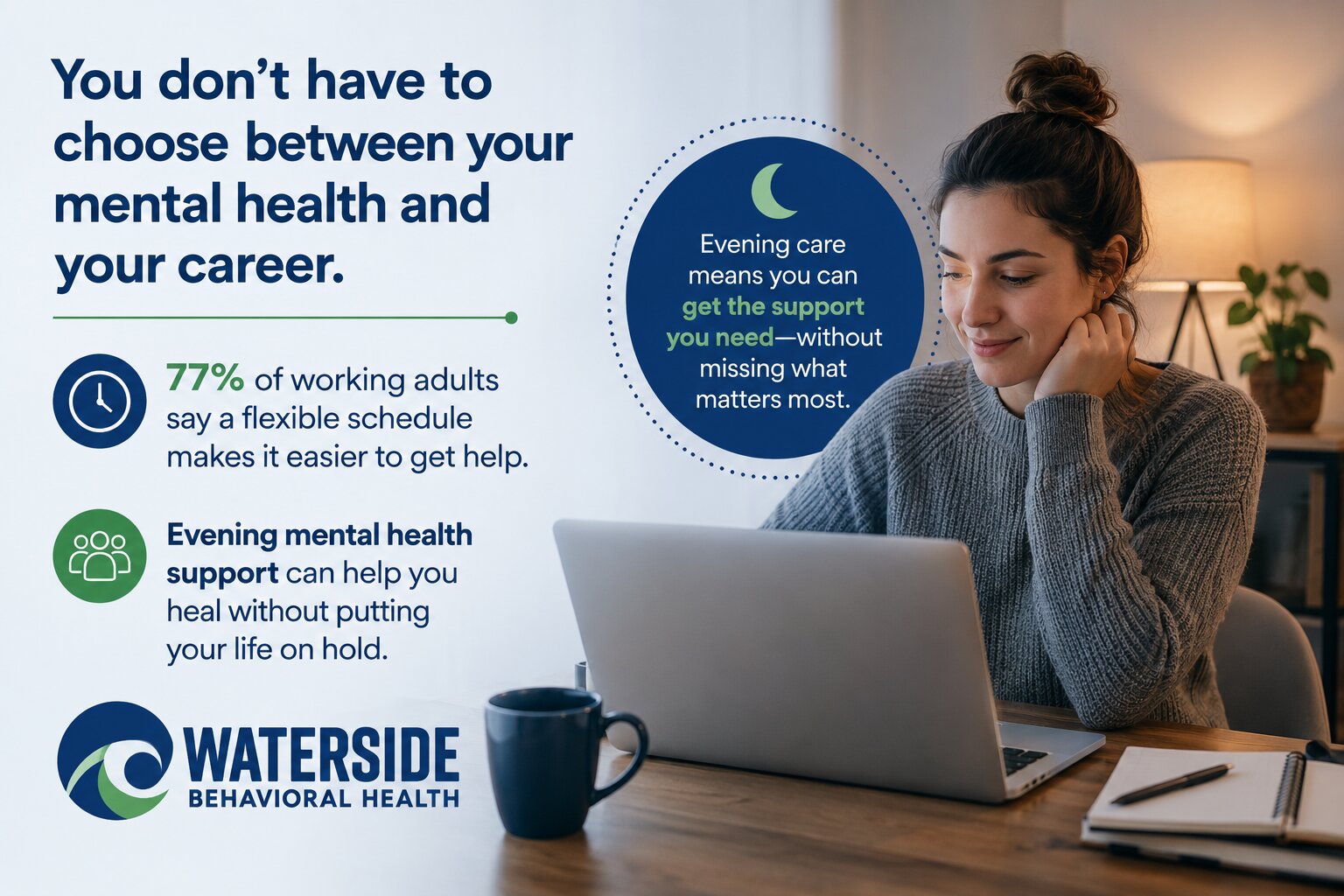
Programs with evening availability can make it possible to receive consistent support while maintaining work, school, and family commitments.
Instead of asking yourself whether you can fit treatment into your life, look for treatment designed to fit into your life.
Step 3: Look Beyond the Schedule
Evening hours matter.
But they shouldn’t be the only thing you evaluate.
Ask yourself:
- Do I feel comfortable with this team?
- Is the care individualized?
- Will my concerns actually be heard?
- Are evidence-based therapies offered?
- Does the program understand how anxiety affects working adults?
A convenient schedule means very little if you don’t feel understood once you arrive.
The right environment should feel welcoming rather than intimidating.
You should leave sessions feeling supported—not judged.
Step 4: Choose a Program That Helps You Build Real-Life Skills
Anxiety doesn’t disappear because someone tells you to “think positively.”
It changes through practice.
That’s why many treatment plans focus on practical coping skills you can begin using immediately.
You might learn how to recognize anxious thought patterns before they spiral.
You may practice calming techniques for stressful meetings.
You may build healthier routines that improve sleep, reduce overwhelm, and strengthen emotional resilience.
Many people also benefit from evidence-based approaches available through treatment options in Massachusetts, where everyday situations become opportunities to practice healthier responses rather than sources of constant fear.
The goal isn’t to remove every stressful situation.
The goal is to help you respond differently when stress appears.
Step 5: Give Yourself Permission to Stay Employed While Healing
Some people worry that continuing to work means they aren’t struggling enough to deserve treatment.
That couldn’t be further from the truth.
Many individuals become remarkably skilled at functioning while suffering.
They meet deadlines.
Raise children.
Care for aging parents.
Maintain relationships.
What nobody sees is how much energy those responsibilities require.
Think of anxiety like driving with the parking brake partially engaged.
The car still moves.
But every mile requires far more effort than it should.
Treatment isn’t about proving you’re incapable.
It’s about removing the unnecessary weight you’ve been carrying every day.
Step 6: Expect Progress, Not Perfection
Recovery rarely happens in one breakthrough session.
Instead, it usually unfolds gradually.
You notice you sleep a little better.
You stop replaying every conversation.
You feel less overwhelmed before work.
You answer emails without your stomach tightening.
Small changes begin adding up.
Over time, the things that once consumed enormous emotional energy become manageable again.
That’s how lasting progress often looks.
Quiet.
Steady.
Real.
Step 7: Remember That Asking for Help Is a Sign of Strength
People often believe they have to choose between being responsible and taking care of themselves.
The truth is that those two goals support one another.
Protecting your mental health often helps you become more present at work, more engaged with your family, and more confident in everyday life.
The strongest people aren’t those who never struggle.
They’re the ones willing to acknowledge when carrying everything alone has stopped working.
If you’ve been searching late at night, wondering whether there is a better way to manage anxiety without sacrificing your career, there is reason to feel hopeful.
Support exists.
It can fit your schedule.
And you don’t have to wait until life falls apart before accepting it.
Frequently Asked Questions
Can I attend treatment without missing work?
Yes. Many people choose programs with evening hours specifically because they want to continue working while receiving consistent mental health support.
How often do evening programs meet?
Schedules vary depending on your individual needs. Some people attend several evenings each week, while others participate in a different schedule recommended during their assessment.
Will my employer know I’m receiving treatment?
Your treatment is confidential. Many people attend appointments outside working hours without needing to discuss their care with their employer.
Is evening treatment only for severe anxiety?
No. Evening programs serve people with a wide range of symptoms. Many individuals seek help before anxiety becomes severe because early intervention often leads to better outcomes.
What therapies are commonly included?
Treatment may include individual therapy, group therapy, skill-building sessions, stress management techniques, and evidence-based approaches tailored to your specific needs.
How do I know if this level of support is right for me?
The best place to begin is with a professional assessment. It helps determine which type of care best matches your symptoms, goals, schedule, and daily responsibilities.
Call 774-619-7750 or visit our mental health treatment in Massachusetts to learn more about our mental health treatment in Plymouth, Massachusetts.