

For some people, the hardest part of the day begins before they even get out of bed.
Your eyes open, and within moments your heart is racing. Your stomach feels tight. Your mind immediately starts listing everything that could go wrong. Nothing bad has happened yet, but your body already feels as though it’s preparing for a crisis.
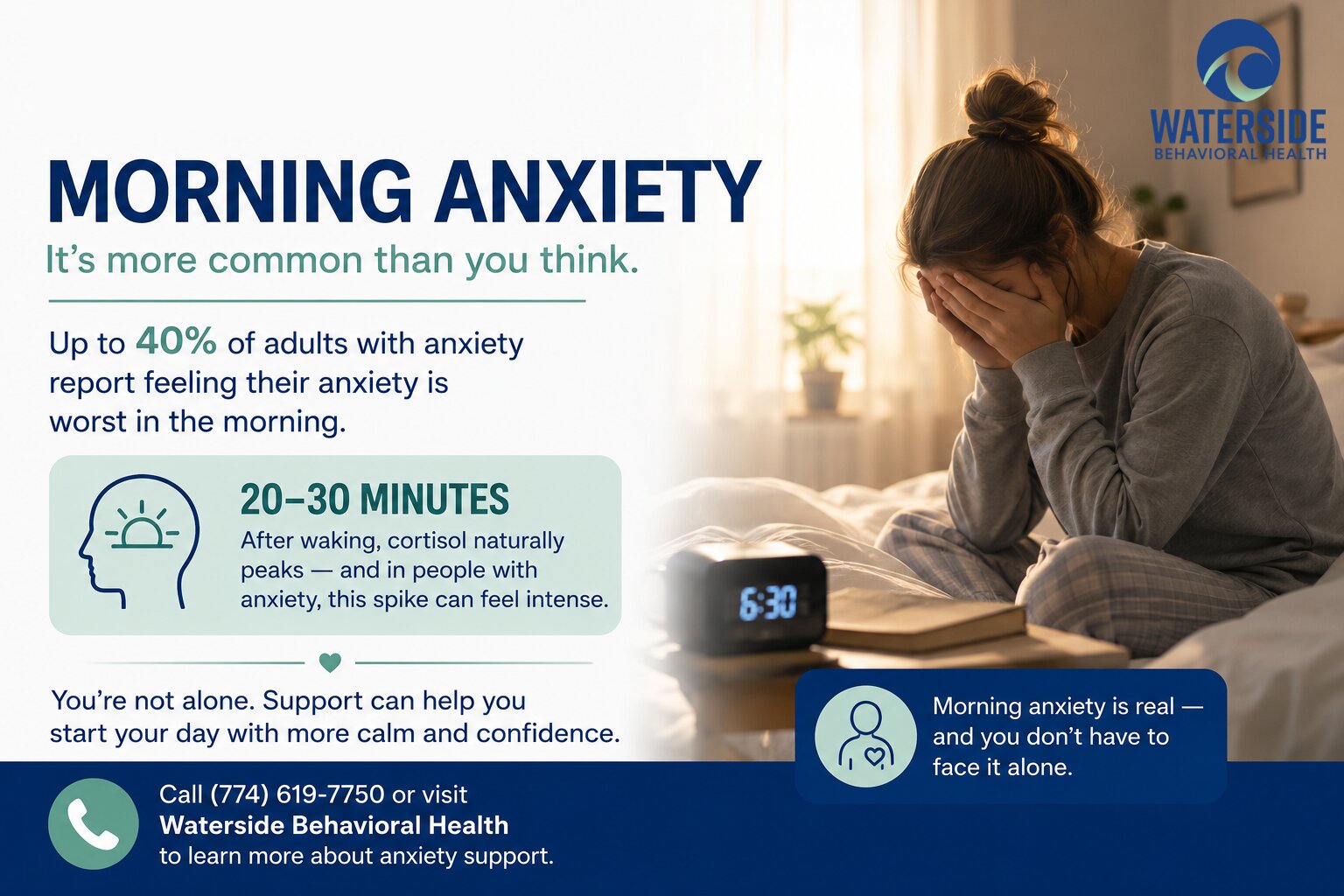
If you’ve experienced this, you’re not alone. Morning anxiety is surprisingly common, and it doesn’t mean you’re imagining your symptoms or “starting the day with the wrong attitude.” In fact, waking up anxious before anything has happened often has a real physiological explanation.
If you’re learning more about anxiety and why it affects both the mind and body, the information available through Waterside Behavioral Health can help you better understand anxiety disorders and evidence-based approaches for managing them. Understanding why morning anxiety occurs is often the first step toward changing how you respond to it.
What Is Morning Anxiety?
Morning anxiety refers to anxiety that is present immediately upon waking or becomes most intense during the first part of the day.
Unlike nervousness about a specific event—such as an interview or presentation—morning anxiety often appears before there is any obvious trigger.
Many people wonder:
- “Why do I wake up anxious?”
- “Nothing has happened yet, so why do I already feel overwhelmed?”
The answer is that anxiety doesn’t always require an immediate cause. Your brain and nervous system can become activated before your conscious mind has even started thinking about the day ahead.
Common morning anxiety symptoms
People describe morning anxiety symptoms in many different ways, including:
- Racing thoughts
- A sense of dread
- Tightness in the chest
- Rapid heartbeat
- Upset stomach or nausea
- Sweating
- Restlessness
- Muscle tension
- Difficulty getting out of bed
- Feeling overwhelmed before starting daily tasks
For some individuals, these symptoms gradually improve as the day goes on. Others notice that mornings consistently feel like the most difficult part of the day.
Why Mornings Feel So Difficult: The Cortisol Awakening Response
One of the most important reasons morning anxiety occurs involves something called the cortisol awakening response (CAR).
Despite cortisol’s reputation as the “stress hormone,” it plays many healthy and necessary roles in the body.
Every morning, your brain naturally releases more cortisol to help you transition from sleep to wakefulness.
This process:
- Increases alertness
- Raises blood pressure slightly
- Mobilizes energy
- Helps prepare your body for the day
For most people, cortisol levels rise significantly during the first 20 to 30 minutes after waking before gradually declining throughout the day.
This increase is completely normal.
When anxiety amplifies the cortisol response
For people living with anxiety disorders, however, this natural cortisol surge may feel much stronger.
Researchers have found that individuals with anxiety often have heightened sensitivity to stress responses, making the normal morning cortisol increase feel more intense.
Instead of simply becoming alert, the body may react as though it’s preparing for danger.
This can create symptoms such as:
- Rapid breathing
- Increased heart rate
- Racing thoughts
- Physical tension
- A feeling that something is wrong
Even when nothing threatening is happening.
Other factors that contribute to morning anxiety
The cortisol awakening response isn’t the only reason mornings can feel overwhelming.
Several other factors often play a role.
Lower blood sugar
After sleeping for several hours without eating, blood sugar levels are naturally lower.
For some people, especially those prone to anxiety, this can contribute to shakiness, irritability, or sensations that resemble anxiety.
Overnight rumination
Although you’re asleep, your brain doesn’t completely stop processing emotions.
People who experience chronic worry often wake up with the same unresolved concerns they had before going to bed.
It’s as though the brain immediately resumes yesterday’s unfinished conversations.
Transitioning from sleep to full alertness
Moving from deep sleep into full awareness requires significant changes throughout the nervous system.
For anxious individuals, this transition can feel abrupt, making it easier for the brain to interpret normal bodily sensations as signs of danger.
These combined factors help explain why many people consistently identify mornings—not evenings—as the hardest time of day.
How to Ease Morning Anxiety: A Practical Routine
While no morning routine eliminates anxiety entirely, certain habits can reduce the intensity of symptoms and help your nervous system transition into the day more gently.
These strategies are intended to support emotional well-being—not replace professional care when anxiety is significantly affecting your life.
Wait before checking your phone
Many people reach for their phones within seconds of waking.
Emails, social media, news alerts, and work messages immediately increase mental stimulation.
If possible, wait 15 to 30 minutes before checking your phone.
Giving your brain a quieter start allows your nervous system to wake up without additional stress.
Move your body
Light physical activity within the first half hour of waking can help regulate stress hormones.
This doesn’t have to be an intense workout.
Simple options include:
- Walking
- Gentle stretching
- Yoga
- Light mobility exercises
Movement also helps reduce muscle tension that often accompanies anxiety.
Eat a balanced breakfast
Eating a breakfast that includes protein may help stabilize blood sugar and reduce physical sensations that can mimic anxiety.
Examples include:
- Eggs
- Greek yogurt
- Cottage cheese
- Nut butter
- Protein smoothies
Everyone’s nutritional needs differ, but avoiding long periods without eating may help some people feel more physically stable.
Practice brief grounding
Grounding exercises don’t eliminate anxiety, but they can help redirect attention away from catastrophic thinking.
Try:
- Taking three slow breaths
- Naming five things you can see
- Feeling both feet firmly on the floor
- Holding a cool glass of water
- Paying attention to physical sensations in the present moment
Even one or two minutes of intentional grounding can help interrupt automatic worry patterns.
Wake up at a consistent time
Maintaining a regular sleep schedule supports healthy circadian rhythms.
Although sleeping in occasionally feels appealing, frequent changes to your sleep schedule can make waking more difficult and may increase morning grogginess or stress.
Consistency often benefits both sleep quality and emotional regulation.
When Morning Anxiety Signals Something More
Everyone experiences stressful mornings from time to time.
Morning anxiety may deserve closer attention if it:
- Happens most mornings
- Makes it difficult to begin your day
- Interferes with work or relationships
- Causes persistent physical symptoms
- Leads you to avoid responsibilities
- Is accompanied by excessive worry throughout the day
Morning anxiety is often one part of a broader pattern involving generalized anxiety disorder, panic disorder, or other anxiety-related conditions.
If your symptoms are becoming persistent or interfering with daily life, it’s worth having a conversation with a qualified mental health professional.
The goal isn’t simply to make mornings easier.
It’s to understand the underlying anxiety that may be driving them.
For individuals seeking more information about anxiety and evidence-based care, Waterside Behavioral Health provides additional resources about anxiety disorders and available support.
Small Changes Can Make Mornings Feel Different
Morning anxiety often convinces people that something terrible is about to happen.
In reality, your nervous system may simply be reacting to predictable biological processes combined with learned patterns of worry.
Understanding those patterns doesn’t make anxiety disappear overnight.
However, it can reduce self-blame.
Instead of asking:
“What’s wrong with me?”
You can begin asking:
“What is my nervous system trying to tell me?”
With time, healthy coping strategies, and appropriate support when needed, mornings can begin to feel less overwhelming and more manageable.
Frequently Asked Questions
Why is anxiety worse in the morning?
Morning anxiety is often linked to the cortisol awakening response, a normal rise in cortisol that occurs shortly after waking. In people with anxiety disorders, this natural increase may feel more intense and contribute to racing thoughts, physical tension, and feelings of dread.
How do I stop morning anxiety?
While there isn’t a single solution, many people benefit from delaying phone use after waking, eating a balanced breakfast, engaging in light physical activity, practicing grounding exercises, and maintaining a consistent sleep schedule. Persistent anxiety may also benefit from professional evaluation and support.
Is morning anxiety normal?
Occasional morning anxiety can happen to anyone, especially during stressful periods. However, if you wake up anxious most mornings and it interferes with your daily life or overall well-being, it may be a sign of an underlying anxiety disorder that deserves professional attention.
Final Thoughts
Waking up anxious before the day has even begun can feel discouraging, especially when you can’t identify a clear reason for your symptoms. Fortunately, morning anxiety has understandable biological and psychological contributors, and experiencing it doesn’t mean you’re weak or failing to cope.
Recognizing the role of your nervous system, making supportive changes to your morning routine, and seeking help when anxiety becomes persistent can all make a meaningful difference.
If morning anxiety is affecting your daily life, call (774) 619-7750 or speak with someone at Waterside Behavioral Health about anxiety treatment program support.