

There’s a quiet heartbreak in noticing the signs again. The late mornings. The closed door. The disconnection. You want to believe it’s just a bad week—but in your gut, you know it’s more.
If your child is slipping back into depression—or never fully came out of it—you’re not alone. And you’re not powerless. A depression treatment program doesn’t just help the first time. It supports healing at every stage, even the in-between ones.
At Waterside Behavioral Health, we walk with families through the hard middle—after the first treatment, after the hopeful moments, and yes, even after the backsliding. Because healing isn’t linear. But help is still possible.
Setbacks Don’t Erase Progress
When a child’s depression symptoms return, it can feel like all the hard work was for nothing. But here’s the truth: setbacks are part of recovery. Especially with depression.
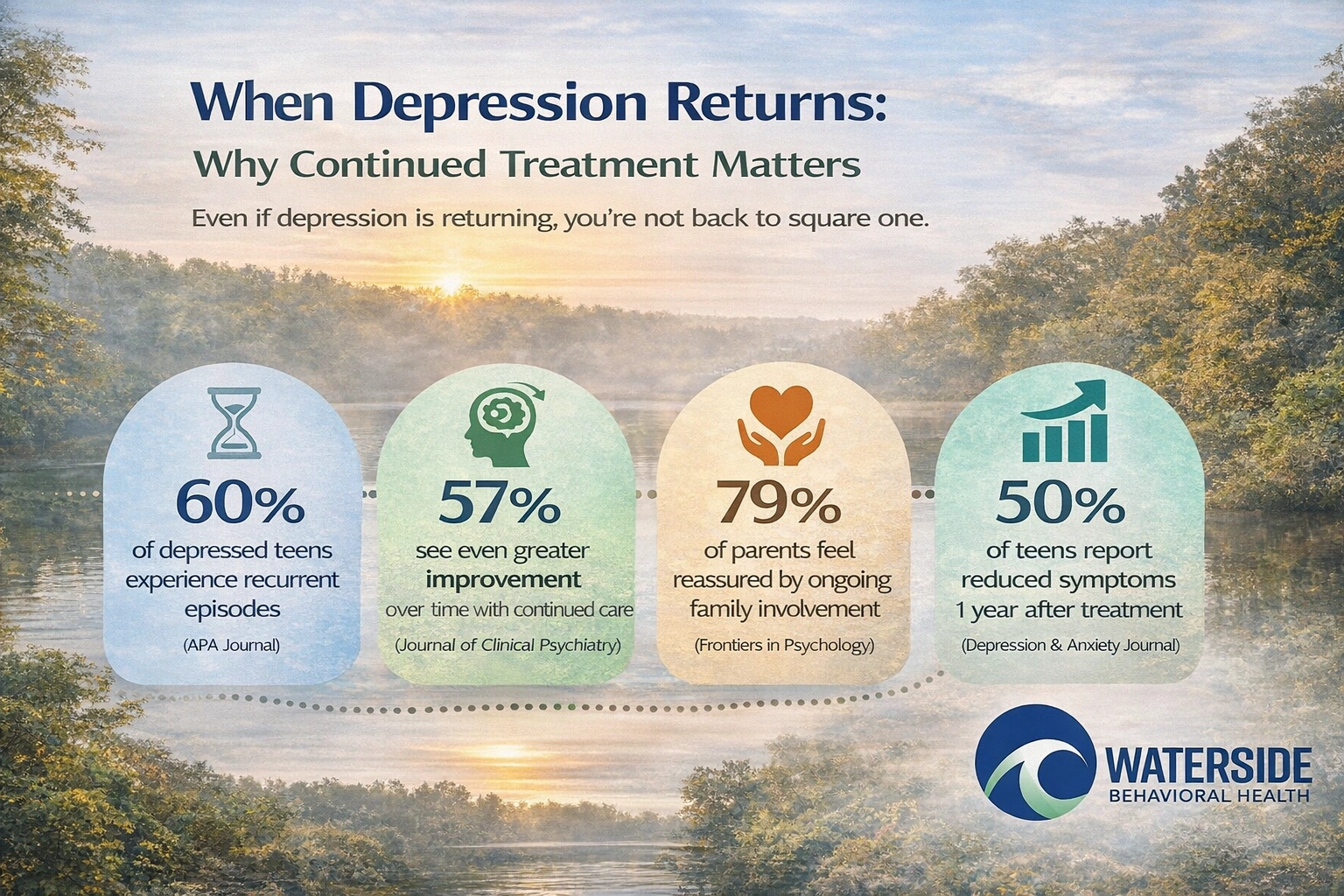
Symptoms that fade for a while can return under stress, change, or even without a clear trigger. That doesn’t mean they’re “back to square one.” It means their brain and body are still healing.
A depression treatment program creates a space where they can reconnect to their tools, deepen their insight, and build strength—not start over, but pick up where they left off.
Recognizing the Signs That It’s Time for Support
You know your child best. And you may already be seeing signs that they’re struggling again.
- Withdrawing from friends or family
- Sleeping too much or too little
- Losing interest in things they used to care about
- Avoiding responsibilities or communication
- Increased irritability, numbness, or hopelessness
Even if these signs seem “milder” than before, they matter. Depression often comes back quietly. But the earlier you seek help, the easier it is to regain momentum.
Programs like Waterside’s offer support in Massachusetts that meets people where they are—not just in crisis, but in need.
What a Depression Treatment Program Looks Like (the Second Time Around)
If your child has been through treatment before, they might resist the idea of going again. It can feel like a step backward. But the truth is, re-engaging in care can be an act of courage—not defeat.
Here’s what to expect:
- Individualized assessment: A therapist will work with your child to understand what’s changed since their last round of care.
- Refined treatment goals: They won’t just repeat the same program—they’ll build on it.
- Flexible structure: Whether they need full-day support or weekly therapy, programs adjust to their current level of need.
- Family inclusion: You’ll be offered ways to stay informed and supported—because you’re healing too.
Treatment isn’t one-size-fits-all, especially when someone is returning. The goal isn’t to “fix” them. It’s to walk with them through whatever they’re facing now—with new insight and care.
If you’re navigating this in Plymouth County, MA, know that specialized programs are accessible without needing to wait for a full crisis to unfold. The right kind of support can meet your family quietly, before things escalate.
Parents Carry a Quiet Kind of Grief—And Hope
It’s normal to feel discouraged. You’ve done the research. You showed up. You supported their treatment. And now, things feel like they’re slipping again. You might wonder:
“Did we miss something?”
“Are we going backward?”
“What if it just doesn’t work this time?”
These are real fears. And you’re allowed to have them.
But we’ve seen parents who felt just like you watch their child re-engage with therapy—and find steadier ground than they had before. Progress isn’t about never falling. It’s about knowing how to rise again, with the right support system around them.
Treatment Can Restore Connection—Not Just Function
Depression affects relationships just as much as routines. One of the quietest wounds parents carry is the emotional distance: the silence at the dinner table, the “I’m fine” replies, the texts left on read.
A good depression treatment program doesn’t just focus on symptom reduction. It helps your child learn how to reconnect—first with themselves, then with you and others. It teaches emotional awareness, communication tools, and the slow reintroduction of joy.
In places like Bristol County, MA, families have access to programs that understand these nuanced dynamics. These aren’t just services—they’re soft landings for people who feel emotionally untethered and unsure how to come back.
Healing After a Setback Is Still Healing
Some stories don’t go in a straight line. Yours might have curves, pauses, and even loops. But that doesn’t make the healing any less real.
We’ve seen young adults come back to treatment—not ashamed, but ready. We’ve seen families reconnect after silence. We’ve seen people try again—and not just survive, but grow.
If things are slipping again, it’s not a failure. It’s an opportunity. Not to go back—but to go deeper.
FAQ: When Depression Returns After Treatment
Is it normal for depression symptoms to return after treatment?
Yes. Depression often has recurring episodes. That doesn’t mean treatment didn’t work—it means ongoing care or follow-up support might be needed.
What if my child doesn’t want to go back to treatment?
Start with gentle conversations. Avoid pressure. Remind them it’s not punishment or failure—it’s support. If needed, you can speak with a treatment provider for guidance on how to encourage without pushing.
Will they just repeat the same therapy again?
No. Programs tailor treatment to the current situation. They’ll revisit past progress and update their approach based on what’s happening now.
Can I be involved without overstepping?
Absolutely. Many treatment programs offer family support options—from education to counseling—so you can stay connected in a healthy, helpful way.
Is it too late to help if things have already gotten worse?
It’s never too late. The most important thing is not when they return to treatment—but that they do, with people who know how to walk through the hard parts with compassion.
Hope Still Has a Place at the Table
You don’t need to have all the answers.
You just need to know there are still options—and still hope.
Call 774-619-7750 to learn more about our depression treatment program services in Massachusetts.
Your love matters. Their progress still counts. And this chapter can still lead somewhere good.