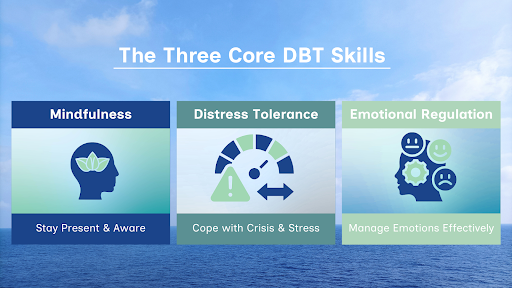
In DBT treatment, skills training focuses on three core areas, skills-based approach to mental health treatment that helps individuals better understand, manage, and respond to intense emotions. At the core of DBT are three essential skill areas: mindfulness, distress tolerance, and emotional regulation.
These skills are designed to help people stay grounded in the present moment, cope with emotional crises in healthier ways, and develop greater stability in their thoughts, feelings, and behaviors. Many individuals benefit from learning these skills as part of a comprehensive dialectical behavior therapy in Massachusetts program that supports long-term emotional wellness and resilience.
The primary DBT skill areas include:
Together, these skills help individuals build healthier coping patterns, improve emotional balance, and respond more thoughtfully to challenging situations.
DBT skills are practical coping strategies taught in therapy to help individuals navigate overwhelming emotions, impulsive behaviors, and high-stress situations. Unlike approaches that focus only on insight, DBT emphasizes learning concrete tools that can be practiced both during and outside of therapy sessions.
These skills are especially helpful for individuals experiencing:
Over time, practicing DBT skills can improve self-awareness, reduce emotional reactivity, and support healthier responses to difficult experiences.
Mindfulness is the foundation of all DBT skills. In DBT treatment, mindfulness focuses on staying present and aware of thoughts, emotions, and physical sensations without immediately reacting or judging those experiences.
Rather than trying to eliminate difficult thoughts or feelings, mindfulness helps individuals observe them with curiosity and acceptance. This creates space to pause before reacting and choose more intentional responses.
Mindfulness skills can improve emotional well-being by helping individuals:
These benefits can enhance progress during individual therapy sessions and make it easier to apply coping strategies in everyday life.
Distress tolerance skills are designed to help individuals cope with emotional crises without resorting to harmful or impulsive behaviors. Instead of trying to eliminate distress immediately, these skills focus on safely getting through difficult moments while preventing escalation.
They are especially valuable during periods of:
Common distress tolerance techniques may include:
When practiced consistently, these techniques can build resilience and increase confidence in managing difficult emotional experiences.
Emotional regulation skills focus on recognizing, understanding, and managing emotional responses in healthier ways. Many individuals in mental health treatment experience rapid mood shifts, intense emotional reactions, or difficulty identifying what they are feeling.
DBT emotional regulation skills help individuals:
This allows individuals to experience emotions without feeling controlled by them, leading to more stable mood patterns and improved daily functioning.
As emotional regulation improves, individuals often experience:
These skills can be particularly beneficial for individuals managing trauma responses, chronic stress, or long-standing emotional dysregulation.
DBT skills can support a wide range of mental health needs. Individuals who may benefit include:
By learning and practicing DBT skills, individuals can develop greater resilience and a stronger sense of control over their emotional experiences.
Mindfulness, distress tolerance, and emotional regulation work together to create a comprehensive framework for managing emotions and behaviors more effectively. These skills help individuals pause before reacting, tolerate discomfort without impulsive actions, and respond to challenges with greater clarity and balance.
Over time, practicing DBT skills can lead to:
Many individuals learn these skills within a comprehensive DBT program that integrates structured skill-building with personalized therapeutic support.
DBT skills are typically taught and practiced in both individual therapy and group therapy sessions. In individual therapy, clinicians tailor these skills to each person’s unique experiences, goals, and challenges. Group sessions provide a supportive environment where individuals can learn new skills, practice exercises, and gain encouragement from others facing similar struggles.
Between sessions, individuals are encouraged to apply DBT skills in everyday situations. This consistent practice helps reinforce learning and gradually strengthens confidence in managing emotions independently.
Learning skills within a structured DBT therapy program allows individuals to develop these tools progressively and safely under the guidance of licensed mental health professionals. Through ongoing practice, feedback, and clinical support, individuals can strengthen their ability to manage distress, regulate emotions, and stay grounded in the present moment.
Comprehensive mental health support, can include structured skill-building and therapeutic guidance needed to foster long-term emotional stability and overall well-being.These skills are typically taught within a comprehensive DBT program.
Learn how DBT skills are taught in our structured therapy programs. Contact Waterside Behavioral Health to explore personalized mental health treatment options.
The primary DBT skills include mindfulness, distress tolerance, emotional regulation, and interpersonal effectiveness. These skills work together to help individuals better manage emotions, cope with stress, and improve relationships.
DBT skills teach practical coping strategies that reduce emotional reactivity, improve self-awareness, and support healthier responses to stressful situations, all of which can enhance overall mental health functioning.
DBT skills are often taught in both individual and group therapy settings. Individual sessions focus on personalized application, while group sessions provide structured skill learning and opportunities for guided practice.