

If you had met me a few years ago, you probably would’ve assumed I was doing well.
I had a solid job. I answered emails quickly. I hit deadlines. I kept plans. I was the person people depended on. From the outside, my life looked stable enough that nobody would’ve guessed how bad things had gotten internally.
That’s part of why I stayed stuck for so long.
I thought needing help looked obvious. Dramatic. Public.
Meanwhile, I was privately anxious almost every waking hour and drinking just enough every night to quiet my brain down temporarily. Not blackout-level drinking. Not “rock bottom.” Just enough to take the edge off the constant pressure humming under my skin.
The problem was, eventually the edge stopped going away.
And at some point, I realized I had built my entire life around managing stress instead of actually living.
I started looking into treatment options in Massachusetts because I needed help that could fit into my actual life. I couldn’t disappear from work completely. I couldn’t walk away from responsibilities overnight. But I also couldn’t keep pretending exhaustion and anxiety were normal anymore.
I Thought High-Functioning Meant I Was Still Okay
That’s the lie I told myself for years.
Because I was still employed, still paying bills, still showing up externally, I assumed my mental health and drinking “weren’t serious enough” to deserve treatment.
I compared myself constantly:
- “At least I’m not drinking in the morning.”
- “At least I still have a job.”
- “At least nobody knows.”
- “At least I’m functioning.”
But functioning became my entire standard for wellness.
Not happiness.
Not peace.
Not emotional stability.
Just functionality.
And honestly, that’s a miserable way to live.
I wasn’t okay. I was surviving efficiently.
There’s a difference.
Anxiety Was Quietly Running My Entire Life
I used to think anxiety only counted if you were having visible panic attacks or breakdowns.
Mine looked much more polished than that.
Mine looked like:
- checking my phone constantly
- mentally rehearsing conversations before they happened
- feeling tense in every social situation unless I drank first
- struggling to sit still without feeling restless
- lying awake exhausted while my brain replayed everything I’d said that day
- waking up with immediate dread before my feet even touched the floor
I became incredibly skilled at hiding it.
That’s the dangerous thing about being high-functioning. You can suffer privately for years while everyone around you keeps complimenting how “together” you seem.
Meanwhile, your nervous system slowly burns itself out behind the scenes.
At one point, I realized I genuinely couldn’t remember the last time I felt relaxed without alcohol involved somehow.
That scared me more than I wanted to admit.
Drinking Stopped Feeling Fun Long Before I Stopped
This part took me a while to face honestly.
I wasn’t drinking because life felt exciting anymore. I was drinking because I didn’t know how to turn my brain off.
Alcohol became my reward system, coping mechanism, social lubricant, emotional mute button, and sleep aid all at once. Which meant every stressful emotion immediately triggered the thought:
“I need a drink.”
Not because I was reckless.
Because I was exhausted.
That’s something I wish more people understood about high-functioning addiction. A lot of us aren’t chasing chaos. We’re chasing relief.
Temporary silence.
Temporary calm.
Temporary escape from the constant internal pressure.
The problem is, anxiety and alcohol start feeding each other eventually. The drinking helps for a few hours, then the rebound anxiety comes back worse. So you drink again to fix the anxiety that drinking helped create.
It becomes this invisible cycle that slowly organizes your entire life around emotional survival.
And because you still look functional from the outside, people rarely notice how much pain you’re actually carrying.
I Avoided Treatment Because I Thought It Would Destroy My Career
Honestly, this was my biggest fear.
I thought treatment meant disappearing from normal life completely. I pictured long inpatient stays, awkward conversations with coworkers, losing privacy, losing momentum professionally, losing control over my life.
So instead, I kept trying to “manage it myself.”
I downloaded productivity apps.
Started wellness routines.
Made drinking rules.
Promised myself I’d cut back after stressful weeks.
Tried meditation for three days at a time before giving up.
Nothing lasted because I wasn’t addressing the actual problem underneath everything.
I needed support.
Real support.
But I specifically needed support that understood people like me — people who were still functioning outwardly while privately unraveling inside.
That’s what eventually led me to explore online IOP Massachusetts options.
And honestly? The flexibility changed everything.
Getting Help Became Possible Once I Realized I Didn’t Have to Disappear
The idea that I could receive meaningful support while still maintaining my job was huge for me.
I could attend sessions remotely.
Keep working.
Maintain my routine.
Still sleep in my own bed.
Still have privacy while getting help.
That mattered more than I can explain.
A lot of high-functioning people delay treatment because they think the only options available require completely stepping away from life. For some people, more intensive care absolutely is necessary. But for others, flexible treatment options create a bridge between “white-knuckling everything alone” and completely falling apart.
That bridge saved me.
And honestly, just knowing there were other professionals, parents, caregivers, and exhausted high-achievers in similar situations immediately reduced some of the shame I’d been carrying.
Because I realized something important:
I wasn’t uniquely broken.
I was overwhelmed and untreated.
The First Few Weeks Felt Uncomfortable in a Very Honest Way
I wish I could say I jumped into treatment enthusiastically.
I didn’t.
At first, I mostly felt defensive.
When mental health and substance use collide, people become very skilled at minimizing things. Especially intelligent, capable people. We rationalize. Compare. Explain away symptoms.
I kept telling myself:
- “I’m managing.”
- “It’s not that bad.”
- “I just need less stress.”
- “Everyone drinks to unwind.”
But treatment forced me to slow down long enough to notice how much energy I was spending simply trying to hold myself together every day.
That realization was painful.
And strangely relieving.
Because once I stopped pretending I was “fine,” I could finally start figuring out what was actually wrong.
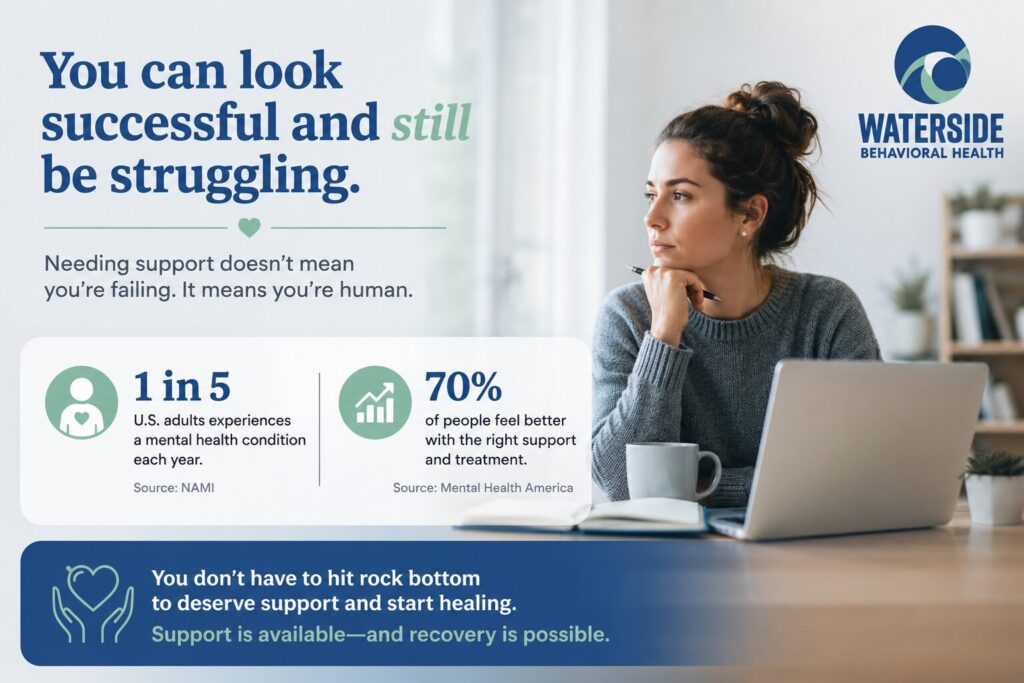
I Realized My Entire Life Revolved Around Avoiding Discomfort
This was probably the hardest truth I had to face.
I thought I was highly productive and disciplined. In reality, I was deeply uncomfortable emotionally almost all the time — and organizing my life around avoiding that discomfort.
Drinking helped me avoid anxiety temporarily.
Work distracted me from emotional exhaustion.
Busyness kept me from sitting still long enough to feel anything honestly.
I wasn’t relaxing. I was escaping in socially acceptable ways.
One therapist said something during treatment that genuinely changed how I viewed myself:
“You’ve been surviving stress for so long that your body no longer knows the difference between pressure and safety.”
That sentence hit me hard.
Because even during calm moments, my nervous system still acted like danger was nearby. I had normalized living in constant low-level panic.
A lot of high-functioning people do.
Healing Didn’t Turn Me Into a Different Person
This was another fear I carried quietly.
I worried that addressing anxiety and addiction would somehow flatten me emotionally or professionally. I thought maybe I’d lose my ambition, creativity, sharpness, or personality if I stopped relying on stress and alcohol to keep myself moving.
Instead, the opposite happened.
As my anxiety became more manageable:
- I focused better
- I slept better
- I became less emotionally reactive
- My relationships improved
- Work became easier because my brain wasn’t overloaded constantly
Most importantly, I stopped feeling like I was secretly fighting myself all day long.
Healing didn’t erase my personality.
It just removed some of the noise that had been drowning me.
Online Support Felt More Human Than I Expected
I assumed online treatment would feel distant or impersonal.
But honestly, being able to open up from my own space made vulnerability easier at first. I didn’t have to walk into a building already emotionally overwhelmed trying to hold myself together publicly.
I could just show up honestly.
And hearing other people describe experiences that sounded painfully familiar changed something in me.
Not dramatic movie-scene breakthroughs. Just quiet realizations like:
- “Oh… I’m not the only one.”
- “Other people also look functional while struggling.”
- “This level of exhaustion isn’t actually normal.”
- “I don’t have to completely collapse before I deserve help.”
That kind of honesty matters.
Especially for people who’ve spent years hiding behind competence.
I Stopped Waiting for a Bigger Disaster Before Taking Myself Seriously
This may have been the biggest shift of all.
For years, I kept waiting for proof that my problems were “serious enough” to deserve support. Some dramatic collapse. Some obvious crisis.
But the reality was, my quality of life had already been shrinking for years.
I was tired constantly.
Disconnected emotionally.
Anxious almost nonstop.
Dependent on alcohol to regulate stress.
Quietly miserable despite looking successful.
That was already enough.
A lot of people in care in Massachusetts are not people who “lost everything.”
They’re people who got tired of surviving life in a constant state of pressure, anxiety, exhaustion, and emotional numbness.
And honestly? I wish I had reached out sooner.
FAQ About Managing Anxiety and Addiction While Working
Can you really do treatment while keeping a full-time job?
Yes. Many flexible treatment programs are designed specifically for people balancing work, family, and responsibilities. Online care can make support more accessible without requiring you to completely step away from daily life.
What if I’m still functioning professionally?
A lot of people struggling with anxiety and substance use continue functioning outwardly for years. You do not need to lose your job or completely fall apart before getting support.
Is online treatment actually effective?
For many people, yes. Online treatment can provide structure, therapy, coping skills, and accountability while reducing barriers like commuting, scheduling issues, and privacy concerns.
What if my drinking doesn’t seem “bad enough”?
If alcohol has become your primary way of coping with stress, anxiety, emotions, or daily life, it’s worth paying attention to — even if you’re still functioning outwardly.
Can anxiety and addiction make each other worse?
Absolutely. Anxiety and substance use often reinforce one another. Many people drink or use substances to reduce anxiety temporarily, but substances can increase anxiety symptoms over time.
What happens in multi-day weekly treatment?
Programs often include group therapy, individual support, coping skills, emotional processing, and mental health education several days per week while allowing people to remain at home and continue responsibilities.
What if I’m afraid treatment will change who I am?
That fear is extremely common. But many people discover treatment helps them reconnect with themselves rather than lose themselves. Healing often removes survival patterns that were covering up your actual personality.
You Don’t Have to Keep Pretending You’re Fine
If anxiety and substance use have quietly become the thing holding your life together — while also slowly exhausting you — support is available. Waterside Behavioral Health offers compassionate care in Massachusetts for people trying to heal without stepping away from their lives completely.
Call 774-619-7750 or visit our treatment options in Massachusetts to learn more about our levels of care for behavioral health in Massachusetts, intensive outpatient programs for behavioral health services in Plymouth, MA.