

If you’re here, chances are you already know something needs attention.
Not in a dramatic, everything-is-on-fire way. More in a quiet, persistent way. The kind where life keeps moving, but you feel like you’re carrying more than you should have to. You might function well on the outside while your mind stays busy, tense, or stuck replaying things you thought you’d moved past.
For many people, this is the moment they first hear about EMDR therapy and wonder whether it’s too intense, too advanced, or meant for people who are “worse off.”
It isn’t.
In fact, EMDR therapy is often effective because it works well for people who are new to treatment—people who are aware, reflective, and ready for something to change, even if they’re not sure how.
Why First-Time Treatment Seekers Often Feel Unsure
Starting therapy for the first time isn’t just about choosing a service. It’s about stepping into uncertainty.
You might be asking yourself:
- Will this make things feel worse before they feel better?
- What if I don’t know what to talk about?
- What if I open something I can’t handle?
- What if my problems aren’t serious enough?
These questions are common, especially for people who have spent years managing stress quietly and independently.
What often helps is understanding that EMDR therapy does not require you to tell your entire story, relive painful moments in detail, or arrive with a clear explanation of what’s wrong. It meets you where you are—without pressure to perform or justify your pain.
What EMDR Therapy Is, Without the Clinical Jargon
EMDR stands for Eye Movement Desensitization and Reprocessing, but the name matters far less than the process.
At its core, EMDR therapy helps the brain process experiences that were stored during stress. When something overwhelming happens, the brain sometimes can’t fully integrate it. The memory gets “stuck,” along with the emotional or physical response tied to it.
EMDR therapy helps the brain finish that processing.
Instead of repeatedly talking through the same experiences, EMDR uses structured bilateral stimulation—such as guided eye movements—to support the brain’s natural ability to heal.
You don’t have to explain everything perfectly.
You don’t have to decide what matters most.
You don’t even have to know where to start.
The work unfolds gradually, guided by safety and readiness.
Why EMDR Therapy Often Feels Safer Than Expected
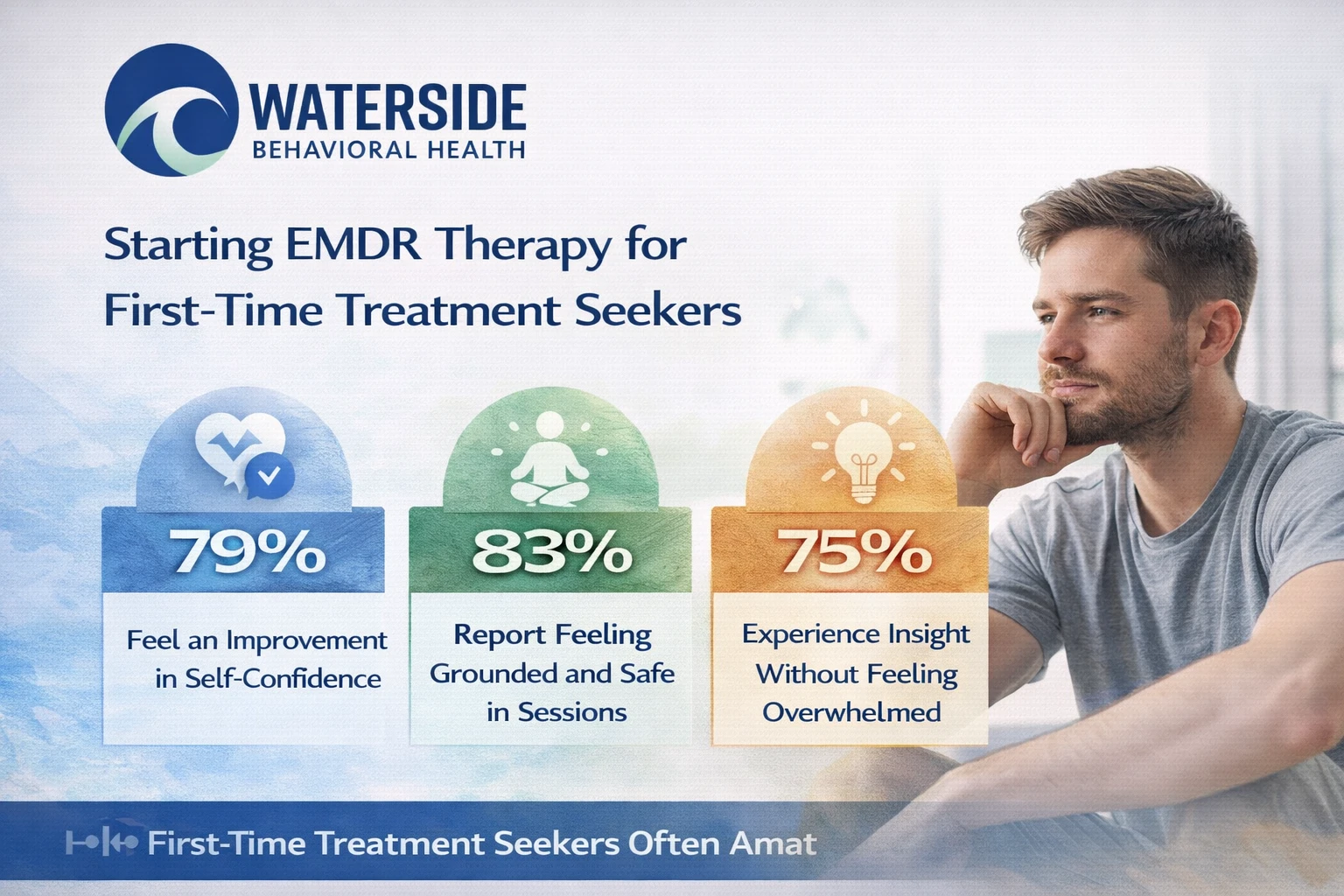
Many first-time treatment seekers assume EMDR therapy will be emotionally overwhelming. In practice, it’s often the opposite.
Sessions are paced carefully. You stay present and grounded. You are not pushed to relive memories or describe painful events in detail. Preparation and stabilization come first, especially for people new to therapy.
A helpful way to think about it:
EMDR therapy doesn’t rip open old wounds. It helps the body realize it no longer has to guard them.
For many people, that realization alone brings relief.
You Don’t Need “Big Trauma” for EMDR Therapy to Work
One of the most common reasons people delay treatment is the belief that their experiences don’t qualify.
From a clinical perspective, this belief isn’t helpful—and it isn’t accurate.
EMDR therapy is effective for:
- Ongoing anxiety or tension
- Chronic stress or burnout
- Emotional numbness
- Difficulty letting go of the past
- Feeling on edge without knowing why
Trauma is not defined by how dramatic something looks from the outside. It’s defined by how the nervous system experienced it. Repeated stress, emotional invalidation, or prolonged uncertainty can leave just as much impact as a single event.
If your body reacts before your thoughts catch up, EMDR therapy can help.
What the First Phase of EMDR Therapy Looks Like
For first-time treatment seekers, EMDR therapy begins with building safety.
This phase focuses on:
- Understanding how stress affects your body and mind
- Learning grounding tools you can use inside and outside sessions
- Establishing trust and pacing
- Identifying goals without pressure
Nothing moves faster than you’re ready for. The intention is not intensity—it’s stability.
Many people notice early shifts that feel subtle but meaningful: improved sleep, fewer intrusive thoughts, or a general sense of calm they haven’t felt in a long time.
Those changes are signs that the nervous system is beginning to settle.
Why EMDR Therapy Helps When Talking Alone Hasn’t
Some first-time treatment seekers worry they won’t know what to say in therapy. Others worry they’ll talk endlessly without feeling different.
EMDR therapy doesn’t rely on constant verbal explanation. It works with how experiences are stored in the brain and body, not just how they’re described.
This can be especially helpful if:
- You understand your patterns but still feel stuck
- You struggle to put feelings into words
- You’ve tried to “think your way out” of anxiety or stress
EMDR therapy allows change to happen without requiring perfect insight or emotional storytelling.
How EMDR Therapy Fits Into Broader Mental Health Support
EMDR therapy is rarely used in isolation. It’s most effective when integrated into a broader approach to care.
At Waterside Behavioral Health, EMDR therapy is offered alongside a range of treatment options in Massachusetts designed to support first-time treatment seekers at every stage.
Depending on your needs, EMDR therapy may be combined with anxiety treatment, skills-based therapy, or other supportive services that help you build coping tools while deeper processing occurs.
This flexibility allows treatment to feel supportive rather than overwhelming.
EMDR Therapy Builds Confidence Over Time
A common fear among first-time treatment seekers is losing control or becoming dependent on therapy.
In reality, EMDR therapy is designed to strengthen internal stability.
As processing occurs, many people notice:
- Reduced emotional reactivity
- Improved focus and clarity
- Greater confidence handling stress
- Less need to avoid certain thoughts or situations
The goal isn’t to make life perfect. It’s to help your nervous system stop responding as if danger is always around the corner.
This sense of internal steadiness often makes it easier to engage with support in Plymouth County, Massachusetts and daily life without feeling exposed or overwhelmed.
Starting Before Crisis Is a Strength, Not a Weakness
You don’t have to wait until things get worse to ask for help.
In fact, starting EMDR therapy before stress turns into crisis often means the work is gentler, more focused, and easier to integrate into daily life.
You’re allowed to start because you want relief—not because you’ve hit a breaking point.
You’re allowed to start because you’re curious—not because you’re certain.
And you’re allowed to take this step without having all the answers.
Taking the First Step Without Pressure or Commitment
Exploring EMDR therapy doesn’t lock you into a decision. It gives you information and options.
If this is your first time seeking treatment, moving slowly is okay. Asking questions is okay. Taking time to understand what feels right for you is okay.
If you’d like to learn more about whether EMDR therapy could support you, Call 774-619-7750 to learn more about EMDR therapy in Massachusetts.
You don’t need to have it all figured out.
You just need a place to begin.
FAQs: EMDR Therapy for First-Time Treatment Seekers
Is EMDR therapy safe for people new to therapy?
Yes. EMDR therapy is often adapted specifically for first-time treatment seekers, with an emphasis on preparation, pacing, and safety.
Will I have to talk about everything that’s happened to me?
No. EMDR therapy does not require detailed storytelling. You share only what feels manageable and relevant.
What if I don’t know what my main issue is?
That’s common. EMDR therapy can begin with present-day feelings, stress, or physical sensations without needing a clear explanation.
Can EMDR therapy help with anxiety?
Yes. EMDR therapy is frequently used to address anxiety, especially when it’s linked to past stress or unresolved experiences.
How long does EMDR therapy take to work?
This varies. Some people notice changes within a few sessions, while others engage in longer-term work depending on their goals.
Will EMDR therapy make me feel out of control?
No. Sessions are designed to keep you grounded and present. You remain aware and in control throughout the process.
Is EMDR therapy emotionally intense?
It can involve emotions, but it’s typically less overwhelming than people expect. The focus is on regulation, not reliving distress.
Can EMDR therapy be combined with other treatments?
Yes. EMDR therapy often works best when combined with other therapeutic approaches as part of comprehensive mental health care.