

I remember the exact moment the shame hit.
It wasn’t when I drank.
It was the morning after—when I convinced myself I had erased everything.
Ninety days sober. Ninety days of effort. Meetings. Structure. Hope. And then one decision that felt like proof I hadn’t changed at all. The old story came back fast: You blew it. You’re back at zero.
What I know now—and what I couldn’t see then—is that I didn’t need to start over. I needed EMDR therapy again.
That distinction changed everything.
The Quiet Build-Up Before the Relapse
Relapse rarely starts with craving.
For me, it started with pressure.
Around the 90-day mark, life got quieter. People checked in less. The urgency faded. And underneath that calm, something old started stirring—tight chest, shallow breathing, a constant sense that something was wrong even when nothing was happening.
I told myself I just needed to push through it. That this was normal. That asking for more help meant I was weak.
What I didn’t understand yet was that sobriety had created space—and my nervous system didn’t know what to do with it.
Why Shame Makes Relapse Feel Final
The hardest part of relapsing wasn’t the substance. It was the belief that I’d invalidated my own recovery.
Shame is efficient like that. It collapses time. It turns one moment into a verdict on your entire future.
I thought going back to therapy meant admitting failure. I thought it meant starting from scratch, retelling the same story, being watched more closely.
Instead, what I found was continuation.
Returning to EMDR therapy didn’t reset my progress. It picked up where the work had paused.
What Changed When I Returned to EMDR Therapy
The first time I did EMDR therapy, I was in survival mode. It helped me stabilize. But I was still braced.
The second time, I wasn’t fighting to stay upright. I was steady enough to process what had been waiting underneath the surface.
That difference mattered.
EMDR therapy works with how experiences are stored in the body—not just how they’re remembered. When I returned, the work wasn’t louder or more intense. It was deeper. Quieter. More precise.
It felt less like crisis response and more like integration.
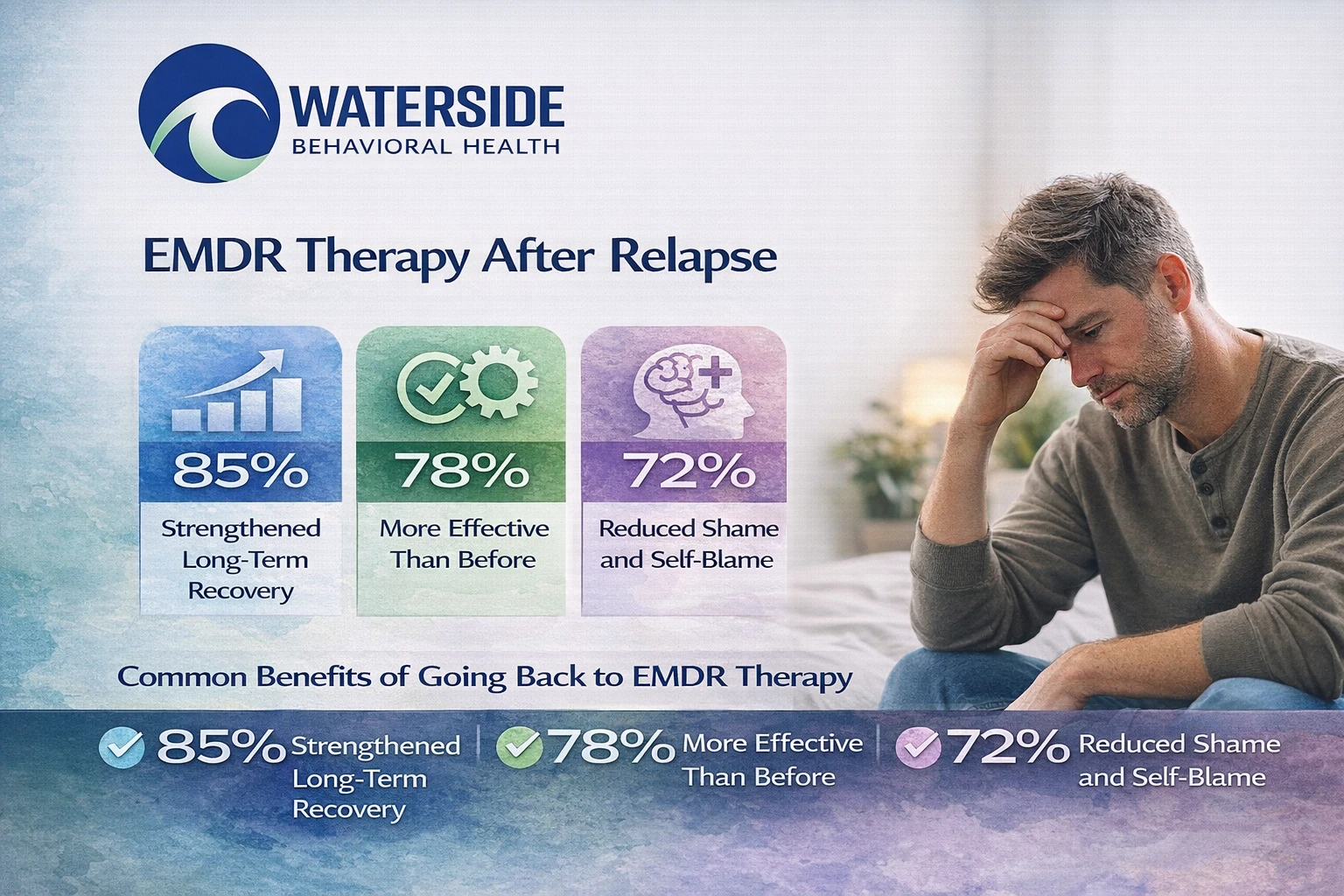
Relapse Didn’t Mean EMDR Therapy Failed
This is the part I wish someone had told me sooner.
Relapse doesn’t mean the therapy didn’t work.
It often means another layer became visible.
Early recovery is about survival. Later recovery is about regulation. EMDR therapy meets you differently depending on where you are.
Going back wasn’t regression. It was refinement.
Like physical rehab—you don’t stop just because you can walk. You keep going until you’re no longer compensating for pain you don’t even notice anymore.
The Small Shifts That Told Me This Time Was Different
Nothing dramatic happened when I restarted EMDR therapy. No breakthrough scene. No emotional collapse.
What changed were the small things:
- I slept through the night
- My reactions slowed down
- Shame stopped narrating every mistake
- The urge to escape lost its urgency
These shifts made it easier to engage with broader treatment options in Massachusetts without feeling overwhelmed or exposed.
For the first time, I wasn’t just sober. I was settling.
EMDR Therapy Isn’t About Digging Up the Past
I used to think trauma work meant reliving everything in detail.
What I learned is that EMDR therapy is about letting the past finish its sentence.
Memories didn’t disappear. They just stopped hijacking the present. My body stopped reacting as if danger was still happening.
That’s when I realized something important:
Needing EMDR therapy again didn’t mean I was broken. It meant I was honest about what was still unresolved.
Going Back Without Being Treated Like I Failed
One of my biggest fears was how I’d be seen when I returned.
What I found instead—especially working with Waterside Behavioral Health—was care that didn’t treat relapse like a moral failure.
EMDR therapy was integrated alongside other support in Massachusetts, not as a punishment or reset, but as a continuation of healing.
That distinction matters. It kept me from disappearing into shame again.
What Returning to Care Taught Me About Progress
Progress isn’t linear.
It’s layered.
I didn’t lose my coping skills. I didn’t forget what I learned. I just discovered where those tools stopped being enough.
For me, that realization happened while living and working in Plymouth County, Massachusetts, where the pressure to “have it together” made it even harder to admit I needed support again.
Later, conversations with other alumni—some from Bristol County, Massachusetts—confirmed what I was slowly accepting: returning to therapy wasn’t starting over. It was staying in the work.
If You’re Reading This After a Relapse
If you’re sitting in that heavy space right now—ashamed, discouraged, convinced you erased your progress—hear this from someone who’s been there:
You didn’t lose what you built.
You found where the work needed to continue.
Relapse doesn’t mean you failed recovery. Sometimes it means your nervous system needs more support than willpower can provide.
Choosing EMDR Therapy Again Without Rewriting Your Identity
You don’t have to make this a comeback story.
You don’t have to explain yourself to everyone.
If EMDR therapy helped before, it can help again—often more effectively, because you’re not in free fall anymore.
Returning doesn’t mean going backward. It means you trust yourself enough to keep going.
Call 774-619-7750 to learn more about EMDR therapy in Massachusetts and how returning to care can support long-term recovery without starting over.
You didn’t fail the work.
You’re just not finished yet.
FAQs: Returning to EMDR Therapy After Relapse
Does relapse mean EMDR therapy didn’t work the first time?
No. Relapse often reveals additional layers that were not ready to be processed earlier. EMDR therapy can be even more effective the second time.
Will returning to EMDR therapy feel like starting from scratch?
Not at all. Most people build on previous work rather than repeat it. The process often feels more focused and grounded.
Is EMDR therapy only for crisis moments?
No. EMDR therapy is commonly used during stable phases of recovery when deeper regulation and integration are possible.
Will I have to retell my entire story?
No. EMDR therapy does not require detailed retelling. The focus is on how experiences are stored in the body, not on narrative detail.
Can EMDR therapy help reduce shame after relapse?
Yes. EMDR therapy often helps reduce the emotional charge attached to relapse-related shame, making it easier to re-engage with recovery.
How long does returning EMDR therapy usually take?
It varies. Some people notice shifts within a few sessions, while others benefit from longer-term work depending on complexity.
Can EMDR therapy be combined with other treatments?
Yes. EMDR therapy is often integrated with CBT, anxiety treatment, and other recovery supports.
What if I’m afraid to go back to treatment?
That fear is common. Reaching out doesn’t mean committing to everything—it means exploring support without isolation.