
I didn’t want to take medication.
Not because I didn’t believe in mental health. Not even because I thought I could tough it out on my own. I was just scared. Scared that the meds would change me. Scared that they’d flatten me, or worse—numb me to a point where I wouldn’t even recognize myself. Scared of being seen as someone who needed that kind of help.
So when I started a Partial Hospitalization Program, I came in wary. I was willing to participate in groups. Willing to listen. But medication? That felt like crossing a line I wasn’t ready for.
What I Thought Would Happen
I expected pressure. I thought I’d be told to “just trust the process” or handed a prescription in the first 10 minutes of meeting with a psychiatrist. I braced for a power imbalance—someone telling me what to do because they thought they knew better.
But none of that happened.
Instead, I met a team that genuinely seemed to care about how I felt. Not just how I behaved, or what symptoms I reported. How I felt—about treatment, about the diagnosis, about the possibility of medication.
And they met my fear with calm.
A Different Kind of Conversation
The first psychiatric consult felt more like a conversation than an evaluation. Yes, they asked questions. Yes, we talked about symptoms. But there was space for me in the room—my fears, my doubts, even my anger.
They didn’t try to fix anything on the spot. They said, “We can take our time with this.” And I believed them.
That phrase opened something in me. Because it acknowledged that I mattered—not just my illness, but my experience of it.
What PHP Was Like Those First Few Weeks
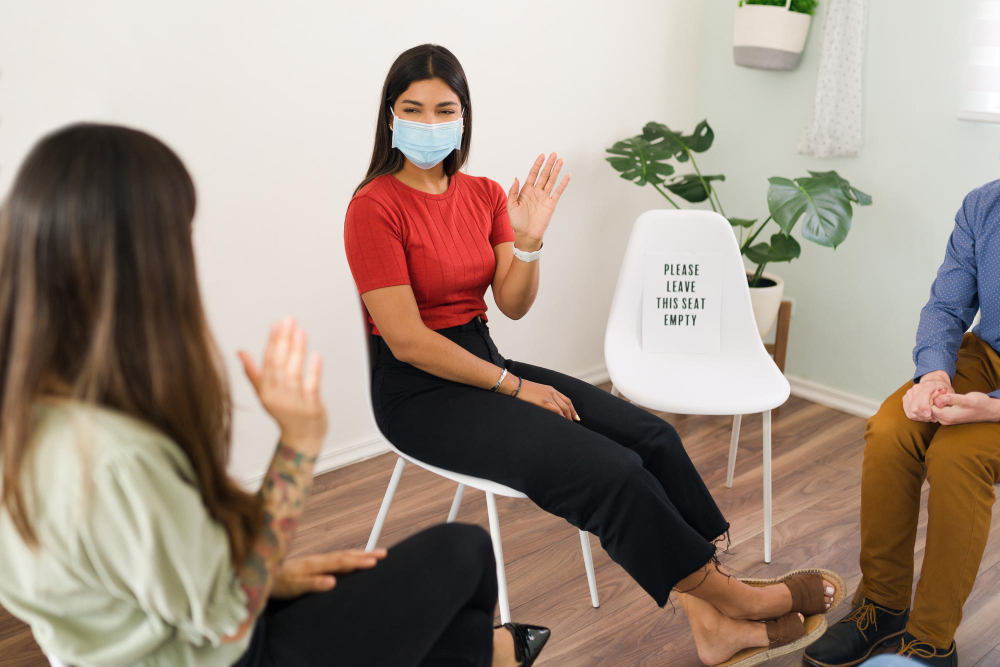
I didn’t know what to expect from a Partial Hospitalization Program. What I found was a structure that held me without suffocating me. Mornings started with check-ins, then group sessions—some on coping skills, some on processing emotions. There were breaks built in. Time to eat. Time to breathe.
It helped that I wasn’t alone. Everyone there was in a similar space—new to treatment, struggling with symptoms, trying to find their footing. And no one expected each other to have it all together.
That helped me trust the process. Not because I suddenly stopped being afraid, but because I didn’t have to pretend not to be.
When Medication Came Up Again
About a week in, the psychiatrist brought up meds again—but gently. They asked if I’d been thinking about it. I had. And I told them, “I’m still not sure.”
So we talked. Not just about the symptoms the medication might help, but about me. They asked what I feared losing. I told them: my creativity, my energy, my sense of control.
And they said, “It makes sense you’d want to protect that.”
That sentence changed everything.
Deciding to Try—And How They Helped Me Do It Safely
We chose a low-dose antidepressant with minimal side effects. They explained the science without making it feel cold. They reminded me I could stop if I wanted. That we’d monitor it together. That it was my decision.
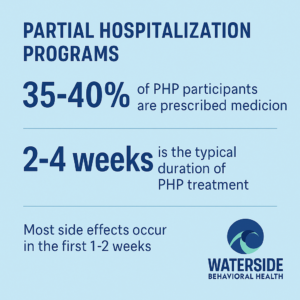
The nurse gave me a sheet that showed what to expect each week—like when side effects might show up, and when I might start to feel a difference. There was even a space to track my mood and physical reactions.
I didn’t feel pushed. I felt supported.
The First Few Days on Medication
I remember the first dose. I was nervous. I took it during breakfast group, my hands shaking a little as I lifted the water glass. But nobody made a big deal out of it. Someone next to me just said, “First time?” and gave me a nod. That was enough.
The first few days were uneventful—which, honestly, was a relief. I felt a little tired, but not drugged. I felt like myself. Just… slightly less on edge.
And that was the beginning of change.
What Actually Shifted—Gently
No, the meds didn’t fix everything overnight. But they softened the edges. The thoughts didn’t spiral as fast. The mornings didn’t feel as crushing. I started eating more. I started talking more. I laughed—really laughed—for the first time in weeks.
What changed wasn’t just chemical. It was relational. Being in a place that respected my process helped me believe that getting help didn’t mean giving up who I was.
You Can Be Scared and Still Move Forward
If you’re reading this, maybe you’re in the place I was: newly diagnosed, unsure what comes next, and terrified of what medication might do to you.
Here’s what I’ll say: your fear is valid. Your questions matter. And there are providers—like the ones I met in PHP—who will meet you where you are.
Starting meds doesn’t mean losing yourself. For me, it meant I could find myself again. A little at a time. Safely. With support.
FAQ: Starting Medication in a Partial Hospitalization Program
Is it required to take medication in a PHP?
No. Medication is often recommended, but it’s never forced. In most PHPs, including the one I attended, you’re part of the decision-making process every step of the way.
How do they help you decide if medication is right for you?
Clinicians will talk with you—not just about symptoms, but your life, your fears, and what you hope for. It’s a collaborative conversation, not a directive.
What if I try a medication and hate it?
You can stop. You can switch. You won’t be punished for changing your mind. Your treatment plan evolves with your input.
Do psychiatric meds work right away?
Most take a couple of weeks to fully kick in. That’s why being in PHP helps—there’s daily support to track how you’re doing and catch any concerns early.
Will I feel like myself on meds?
This was my biggest fear—and the answer, for me, was yes. In fact, I started to feel more like myself. Less fog. Less fear. More me.
📞 Need someone to talk to?
Call us at (774) 619-7750. We’ll walk through your options—at your pace, on your terms.