
When I finished my depression treatment program, I thought I’d feel some kind of closure. Not a movie-ending montage, not sudden joy—just a sense of something being resolved. A soft, internal signal that said, “You did it. You’re okay now.”
That signal never came.
Instead, I left with a certificate, a treatment plan, and a weird kind of silence. I wasn’t in pain anymore—but I wasn’t really living either. And if that’s where you are? If you’ve done the hard work, reached your goals, and still feel… off?
You’re not failing. You’re not ungrateful. You’re not the only one.
Finishing Treatment Isn’t the Same as Feeling Finished
In group, we talked about relapse prevention. We talked about goals, identity, reintegration. I thought I was ready.
But two weeks after graduating, I found myself waking up early, drinking my coffee, staring at the wall. Not in crisis—just kind of blank. Like the lights were on but no one had really moved back in.
And that’s the part I wish more people talked about: how healing doesn’t always end with fireworks. Sometimes it ends with an empty room and the strange task of figuring out who you are when you’re no longer in survival mode.
The Emotional “After” of Healing
People expect you to be better. You expect yourself to be better. And maybe, in many ways, you are.
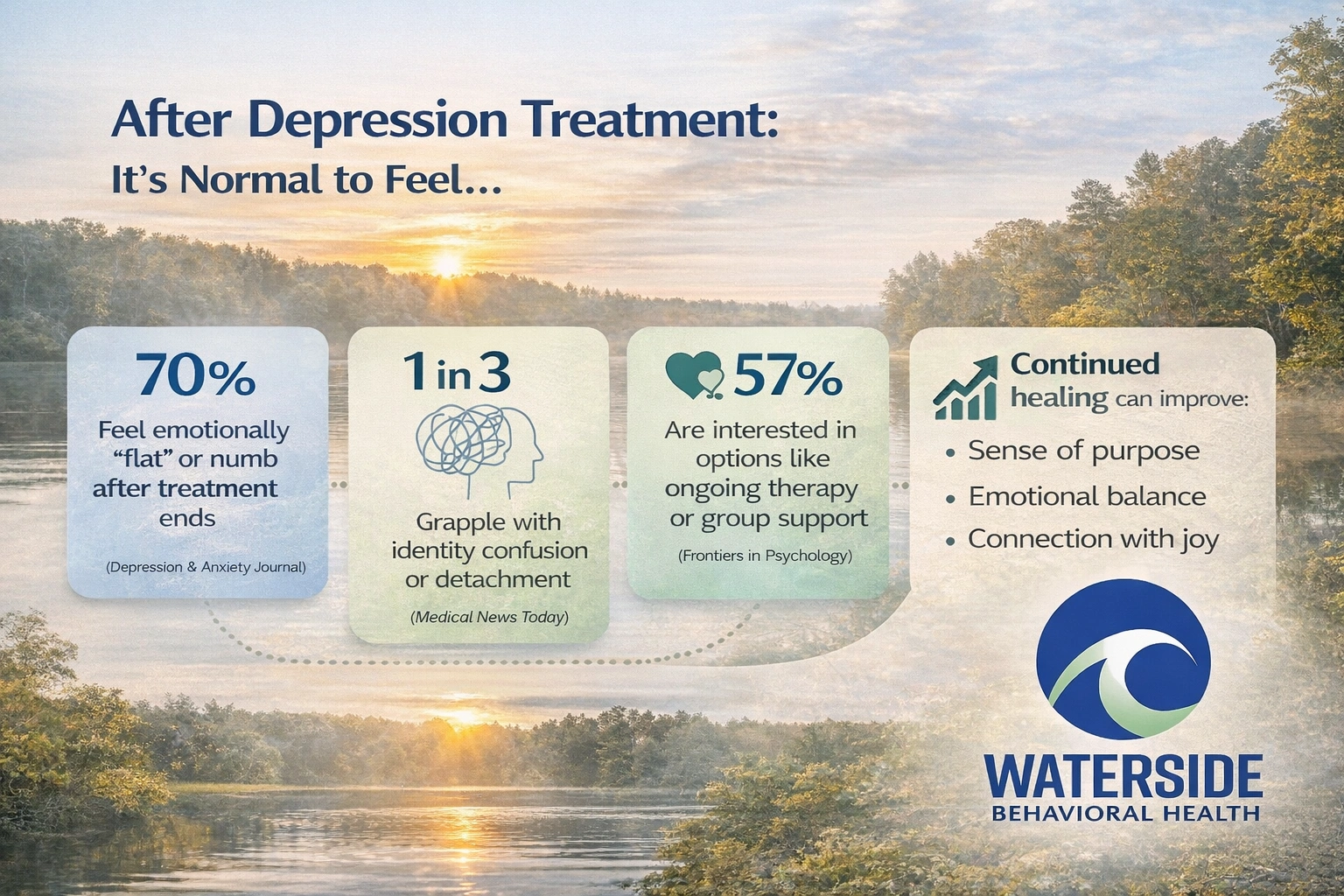
But what they don’t always explain is that emotional numbness, confusion, and detachment can follow even the best depression treatment programs. Especially if the program worked—because now, there’s space. And if you’ve been in survival mode for a long time, space can feel terrifying.
In the absence of pain, joy doesn’t always come rushing in. Sometimes it takes a while for anything at all to arrive.
What I Didn’t Expect After Graduation
- I missed the structure.
- I missed the built-in community.
- I missed having people ask how I was—genuinely.
That loss of connection, even if you didn’t love every moment of treatment, can feel like a kind of grief. You’re proud to be done. But you also wonder: Who am I now?
If you’re in that quiet confusion, especially in places like Plymouth County, MA, you’re not the only one navigating life after treatment wondering why the “after” doesn’t feel like you thought it would.
Wanting More Support Isn’t Backward
There’s this internalized pressure to be fine. To stay strong. To be done. But mental health doesn’t work like a semester class. It’s not a before-and-after, check-the-box kind of thing.
You’re allowed to still need support after completing a depression treatment program. In fact, continuing therapy or joining an alumni group can be the thing that helps you move from “stable” to actually feeling alive again.
That’s the thing no one says out loud: graduation doesn’t mean you’re done evolving.
Feeling Flat Is Common—And It Can Shift
I remember describing it to a friend like this: “I’m not depressed anymore, but I don’t feel anything. It’s like I’m living in grayscale.”
And she said, “Maybe you need to reintroduce color. Slowly.”
That stuck with me.
Because sometimes healing means learning to experience life again—not just manage symptoms. And that’s a different kind of work. Gentler, slower, but just as meaningful.
It’s the work of reconnecting with joy. With play. With trust. Not because something is wrong, but because you’re ready to go deeper.
Whether you’re just out of treatment or years past, options like continued CBT, expressive therapy, or structured alumni support can help. If you’re located in Bristol County, MA, these treatment options in Massachusetts are accessible and designed to meet you where you are—not where people expect you to be.
You Don’t Need a Breakdown to Reach Out
That was the hardest part for me to accept. I didn’t “need” therapy anymore. I wasn’t in danger. But I still felt… off. And I didn’t want to wait until things got worse to do something about it.
So I reached out anyway.
And what I found was a new layer of support—one that honored the progress I’d made while gently guiding me through the next steps of healing.
You’re allowed to want that. Even if you can “function.” Even if people think you’re fine. Especially if you miss feeling connected to yourself.
Depression Recovery Doesn’t Stop at Stability
Programs save lives. But they’re not meant to be the end of your story.
After treatment, you may still need to learn how to:
- Rebuild trust in relationships
- Explore joy without guilt
- Set boundaries without fear
- Experience emotions without analysis
- Create meaning beyond diagnosis
That’s not failure. That’s the rest of the journey.
And you don’t have to walk it alone.
FAQ: Life After a Depression Treatment Program
Is it normal to feel disconnected after treatment ends?
Yes. Many people experience a sense of emotional flatness, loss of direction, or even mild grief after leaving a structured program. You’re adjusting to a new phase of healing—and it’s okay to feel unsteady.
How do I know if I need more support?
If you feel numb, isolated, unmotivated, or like you’re just “getting through the day,” you might benefit from continued care. You don’t need to be in crisis to benefit from therapy or alumni services.
Do I have to go back into full treatment?
Not at all. Many people benefit from stepping into weekly therapy, support groups, or transitional services like CBT or mindfulness-based therapy. It’s about finding the right amount of support for where you are now.
What if people expect me to be better by now?
That pressure is real—but healing doesn’t follow a linear timeline. You’re allowed to protect your peace and continue doing what’s right for your mental health, even if others don’t fully understand it.
What happens if I just ignore the flatness?
It might pass—or it might deepen. Staying connected, curious, and proactive helps prevent emotional stagnation from turning into relapse or burnout. You deserve more than just “getting by.”
You Deserve Support That Goes Beyond Survival
You don’t have to crash to reach back out.
You don’t need a new diagnosis to want more than “fine.”
Call 774-619-7750 to learn more about our depression treatment program services in Massachusetts.
Even after graduation, your healing still matters. So does your joy.