

There is a group of people who often wait the longest to seek help for anxiety.
Not because they don’t need support.
Because they are still functioning.
They are showing up to work every day. They answer emails. They attend meetings. They pay bills. They take care of children. They maintain friendships. They meet expectations.
From the outside, they appear successful.
Inside, however, they may feel like they are running a marathon that never ends.
As a clinician, I’ve worked with many professionals who carried anxiety for years before reaching out for help. Executives, healthcare workers, teachers, business owners, accountants, sales professionals, and managers often tell me the same thing:
“I know something isn’t right, but I can’t stop my life to get help.”
Many eventually discovered anxiety treatment in Massachusetts after realizing that continuing to push through was becoming harder than asking for support.
If you’ve found yourself searching for ways to get help without walking away from your job, you’re not alone.
And more importantly, options exist.
Success Can Hide a Lot of Suffering
One client I’ll never forget was highly respected in his company.
His performance reviews were excellent.
His coworkers viewed him as dependable.
His family saw him as someone who always had everything under control.
Yet every morning began the same way.
His eyes opened, and his mind immediately started racing.
Did I miss an email?
What if today’s presentation goes badly?
What if I forgot something important?
What if I make a mistake?
By the time he arrived at work, he felt exhausted.
Not because he had done anything.
Because his anxiety had already been working overtime.
The difficult thing about high-functioning anxiety is that success often disguises the problem.
People around you may not see what’s happening.
Sometimes you barely acknowledge it yourself.
You tell yourself you’re stressed.
You tell yourself everyone feels this way.
You tell yourself you’ll slow down after the next project, the next promotion, or the next deadline.
But the finish line keeps moving.
And the anxiety stays.
The Fear of Treatment Keeps Many People Stuck
One of the biggest concerns I hear has very little to do with anxiety itself.
It’s the fear of what getting help might require.
People imagine worst-case scenarios.
They picture disappearing from work for months.
They worry about losing income.
They worry about coworkers asking questions.
They worry about becoming a burden to their family.
For many professionals, these fears become barriers that prevent them from taking the first step.
As a result, they choose a different path.
They keep going.
They push harder.
They work longer hours.
They attempt to manage anxiety alone.
At first, this strategy may appear effective.
Eventually, however, anxiety often begins affecting areas of life that are difficult to ignore.
Sleep becomes disrupted.
Patience becomes shorter.
Relationships become strained.
Concentration becomes more difficult.
Even enjoyable activities stop feeling enjoyable.
What once felt manageable starts feeling overwhelming.
When Work Becomes Part of the Anxiety Cycle
Many people assume work causes their anxiety.
Sometimes that’s true.
Often, though, the relationship becomes more complicated.
Anxiety creates pressure.
Pressure increases perfectionism.
Perfectionism creates more stress.
Stress fuels more anxiety.
The cycle continues.
One woman described it this way:
“Every accomplishment only bought me temporary relief. The next worry showed up immediately afterward.”
That experience is incredibly common.
High-functioning individuals often become trapped in a constant state of proving, preparing, checking, and anticipating.
Instead of feeling accomplished, they feel responsible for preventing disaster.
Over time, that mindset becomes exhausting.
What begins as ambition gradually transforms into survival mode.
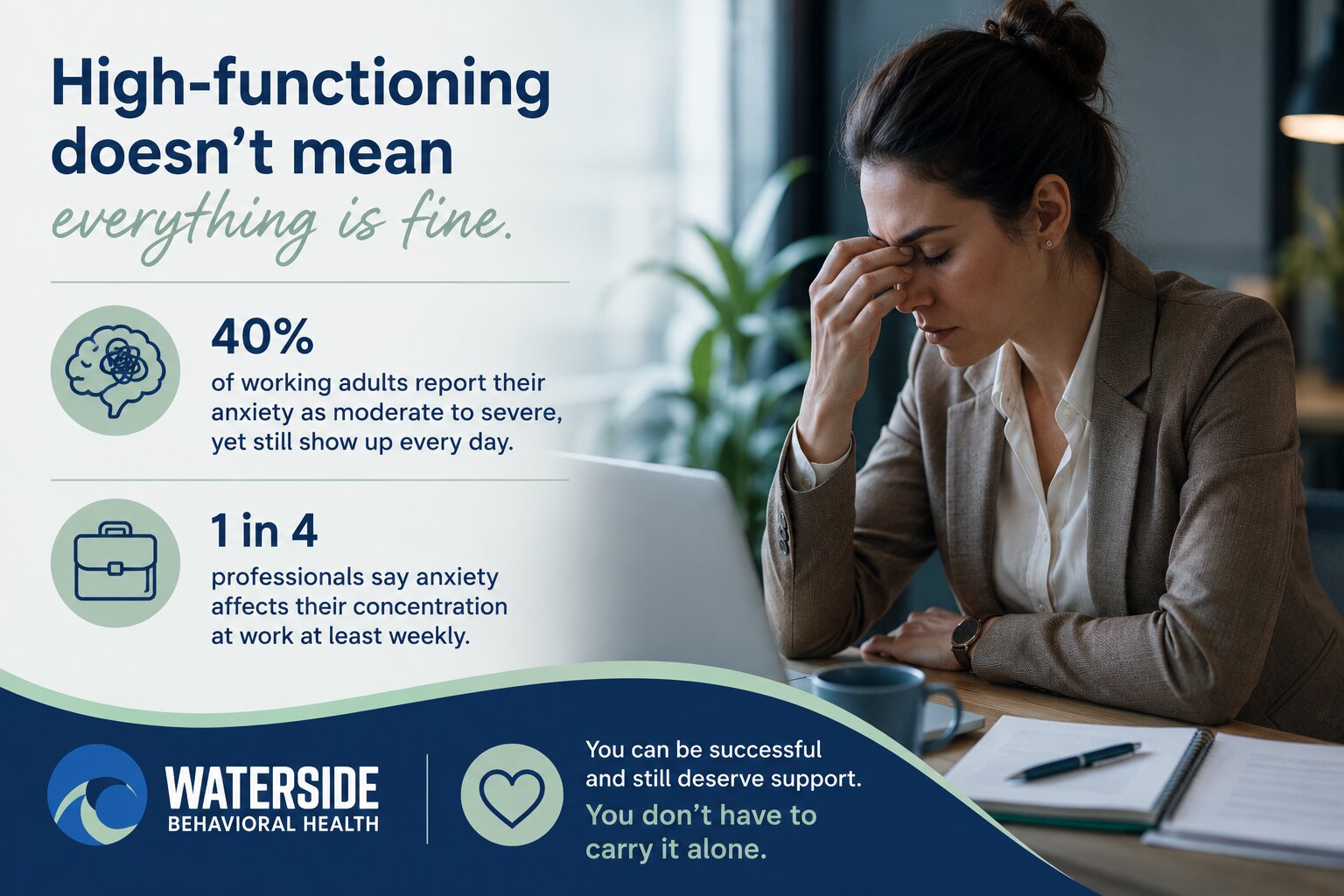
You Don’t Have to Choose Between Recovery and Responsibility
One misconception keeps many people from seeking support.
The belief that getting help means putting life on hold.
In reality, many people benefit from structured treatment while continuing to maintain important responsibilities.
I’ve worked with clients who continued working full-time while addressing significant anxiety symptoms.
They attended treatment around work schedules.
They remained connected to their families.
They continued participating in daily life.
What changed wasn’t their ability to function.
What changed was the amount of suffering they carried while functioning.
That’s an important distinction.
The goal isn’t necessarily to stop living your life.
The goal is to stop anxiety from controlling it.
For some individuals, this includes participating in an anxiety IOP Massachusetts program that offers structured therapeutic support while allowing them to remain active in their careers and personal responsibilities.
Anxiety Doesn’t Stay in Your Mind
Many people seek help only after physical symptoms become impossible to ignore.
They experience:
- Constant muscle tension
- Frequent headaches
- Digestive discomfort
- Fatigue
- Trouble sleeping
- Difficulty focusing
- Restlessness
- Racing heart sensations
One client told me:
“I felt like my body was preparing for a threat that never arrived.”
That description captures anxiety remarkably well.
The nervous system becomes stuck in protection mode.
Even safe situations can trigger a stress response.
Your body remains prepared for danger even when you’re sitting in your office, watching television, or spending time with family.
Living this way is exhausting.
Many individuals eventually seek help in Massachusetts after realizing their anxiety is affecting far more than their emotions.
Small Changes Often Create the Biggest Results
People sometimes expect treatment to produce a dramatic overnight transformation.
Most meaningful progress happens differently.
A person sleeps through the night for the first time in months.
Someone attends a meeting without replaying every word afterward.
A difficult conversation feels manageable instead of terrifying.
An evening is spent relaxing instead of worrying about tomorrow.
These moments may seem insignificant.
They’re not.
Recovery is often built from hundreds of small victories.
Each one teaches your mind and body something important:
You are safer than anxiety wants you to believe.
Over time, those moments accumulate.
Confidence grows.
Fear shrinks.
Life expands.
The Future Doesn’t Have to Feel Like This
One of the saddest beliefs anxiety creates is the idea that nothing will ever change.
People start assuming this is simply who they are.
They believe they will always overthink.
Always worry.
Always feel overwhelmed.
Always carry tension.
Fortunately, that isn’t what I see in treatment.
I see people who regain confidence.
I see professionals who stop dreading every workday.
I see parents who become more present with their children.
I see individuals who rediscover hobbies, friendships, and interests that anxiety pushed aside.
Most importantly, I see people realize they don’t have to spend every day bracing for something bad to happen.
Many individuals also benefit from evidence-based approaches such as help in Massachusetts that help identify and change the thought patterns contributing to chronic anxiety.
The goal isn’t perfection.
The goal is freedom.
Freedom to work without constant fear.
Freedom to rest without guilt.
Freedom to enjoy your life instead of simply managing it.
And that future may be closer than you think.
Frequently Asked Questions
Can I get treatment for anxiety without taking leave from work?
Yes. Many people seek support while maintaining employment. Treatment plans can often be structured around work schedules, allowing individuals to continue managing responsibilities while receiving care.
How do I know if my anxiety is serious enough for professional help?
If anxiety is affecting sleep, relationships, concentration, physical health, work performance, or overall quality of life, it may be worth speaking with a mental health professional. You do not need to wait for a crisis before seeking support.
What if I look successful but feel overwhelmed inside?
This is extremely common among high-functioning individuals. External success does not always reflect internal wellbeing. Many people who appear successful are quietly struggling with significant anxiety.
Will my employer know if I seek treatment?
Privacy laws protect your healthcare information. Specific concerns about confidentiality can be discussed directly with a treatment provider.
How long does treatment for anxiety typically last?
The length of treatment varies depending on individual needs, symptoms, goals, and progress. Some people benefit from short-term support, while others engage in treatment for a longer period.
What types of therapy are commonly used for anxiety?
Evidence-based approaches such as cognitive behavioral therapy (CBT), mindfulness-based interventions, and other therapeutic techniques are frequently used to help individuals manage anxiety symptoms and build healthier coping skills.
Take the Next Step
If anxiety has reached a point where it is affecting your work, relationships, sleep, or overall quality of life, support is available. You do not have to choose between protecting your career and protecting your mental health.
Call 774-619-7750 or visit our mental health treatment in Massachusetts page to learn more about our mental health treatment in Massachusetts, anxiety treatment services in Plymouth, Massachusetts.