

You’re not in survival mode anymore.
That chapter is closed.
You wake up, go to work, keep commitments. People rely on you again. On paper, life looks steady—maybe even good. But inside, there’s a strange sense of suspension. Like you’ve been holding your breath without realizing it.
If you’re honest, the crisis didn’t end so much as it faded. And now that the noise is gone, you’re left with a quieter question:
Is this as free as it gets?
This is often the moment long-term alumni start looking into EMDR therapy—not because things are falling apart, but because they never fully came back together.
This stage doesn’t get talked about enough.
And it deserves more honesty than it usually gets.
When You’re Stable, But Something Still Feels Off
Early recovery is loud. Everything demands attention. Sobriety, safety, routines, relationships, accountability. You’re busy staying upright.
Later recovery is quieter. And that’s where things get confusing.
You might notice:
- Emotional flatness that doesn’t lift with time
- A sense of distance from your own life
- Old reactions showing up in new situations
- A feeling that you’re “managing” more than living
You’re not tempted to blow things up. You’re not spiraling. You’re just… stuck.
That stuckness isn’t a relapse warning sign. It’s often a sign that your nervous system finally has enough safety to process what it couldn’t before.
EMDR Therapy Isn’t a Step Back — It’s a Step Through
A lot of alumni hesitate around EMDR therapy because it sounds like going backward. Like reopening chapters you worked hard to close.
Here’s the peer-level truth:
EMDR therapy doesn’t drag you back into the past. It helps the past stop dragging you.
When you were in crisis, your system prioritized survival. There was no space to integrate everything you went through. Now there is.
EMDR therapy works with how memories and emotional responses were stored—not to relive them, but to help your brain finally register that the danger is over.
Think of it like unpacking boxes you shoved into a closet during a move. You didn’t ignore them because they weren’t important. You ignored them because there wasn’t room.
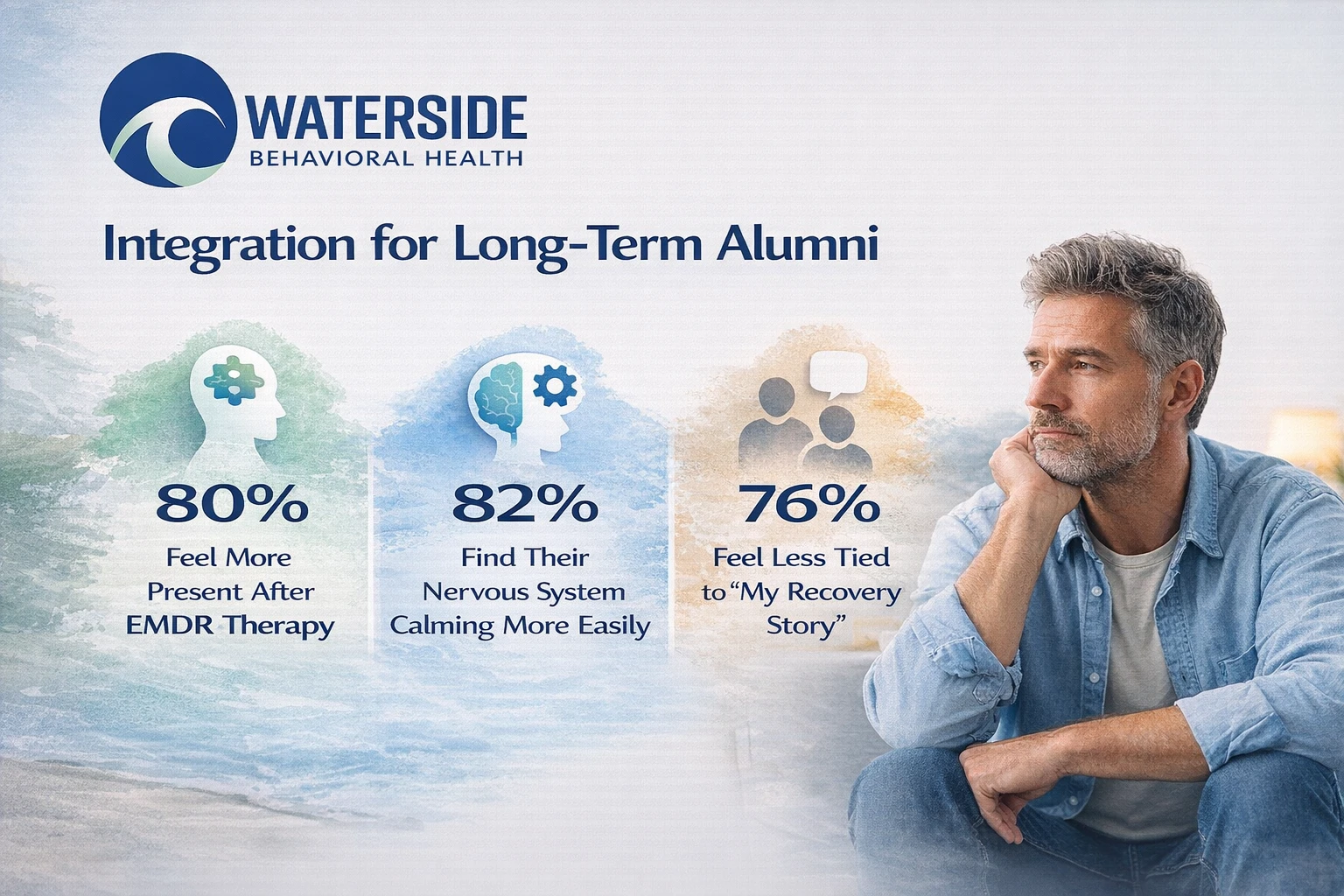
The Part of Recovery No One Prepared You For
No one tells you that long-term recovery can feel emotionally anticlimactic.
You expected relief. Maybe even happiness. Instead, you got stability—and a vague sense of disconnection you can’t explain without sounding ungrateful.
You might think:
“I should feel better than this.”
“Other people would kill for what I have now.”
“Why am I still tense when nothing’s wrong?”
These thoughts don’t mean you failed recovery. They mean recovery did its job—and now something deeper is asking for attention.
EMDR therapy often enters here, when you’re no longer trying to stay sober, but trying to feel present.
How EMDR Therapy Feels at This Stage
If you imagine EMDR therapy as intense emotional excavation, you’re not alone. Most alumni are surprised by how grounded it actually feels.
Sessions are structured and paced. You’re not pushed into overwhelm. You don’t have to tell your whole story again or justify why something mattered.
Instead, you notice:
- Subtle shifts in body response
- Less reactivity to familiar triggers
- More emotional range without effort
- A growing sense of internal quiet
People often say the biggest change isn’t emotional release—it’s relief. Like a constant background tension finally easing.
That relief is what allows you to move forward instead of just maintaining.
Why Time Alone Doesn’t Always Finish the Job
There’s a belief that time heals everything. In some ways, it does. But time doesn’t automatically resolve how the nervous system learned to protect you.
You can be years into recovery and still:
- Stay braced for impact
- Avoid stillness
- Over-function to feel safe
- Struggle to relax without guilt
These patterns aren’t choices. They’re adaptations that once kept you going.
EMDR therapy helps your brain update those adaptations. It allows your system to recognize that the environment has changed—even if your habits haven’t yet.
This kind of work often happens alongside broader help in Massachusetts, especially when anxiety or emotional disconnection lingers long after substances are no longer the issue.
You’re Not Broken — You’re Unfinished
That word matters.
Unfinished doesn’t mean damaged. It means interrupted.
Most long-term alumni didn’t get to fully process their experiences in real time. You did what you had to do to survive. Now, survival is no longer the goal.
EMDR therapy doesn’t undo your progress. It completes it.
It helps integrate the parts of your story that were put on hold so you could keep moving. And integration—not abstinence—is what allows life to expand again.
When EMDR Therapy Becomes a Turning Point
For many alumni, EMDR therapy marks a subtle but powerful shift.
They stop defining themselves solely by recovery.
They start responding instead of reacting.
They experience rest without needing to earn it.
This isn’t about becoming someone new. It’s about becoming less guarded.
This level of work is often part of more nuanced treatment options in Bristol County, Massachusetts, designed for people who are functioning well but want to feel more connected, flexible, and alive.
Choosing EMDR Therapy Without Making It a Big Identity Move
You don’t have to announce this phase. You don’t have to frame it as a major milestone. Many people enter EMDR therapy simply because they’re curious why certain patterns haven’t shifted with time.
That curiosity is enough.
Learning more doesn’t mean committing to anything. It just means you’re open to finishing what you already started.
Call 774-619-7750 to learn more about EMDR therapy in Massachusetts at Waterside Behavioral Health and how they support long-term recovery beyond crisis care.
You didn’t come this far just to stay braced forever.
You came this far to live.
FAQs: EMDR Therapy for Long-Term Alumni
Is EMDR therapy only for people in crisis or early recovery?
No. Many people begin EMDR therapy after they’ve been stable for years. It’s often most effective once safety and consistency are already established.
What if I don’t feel emotionally distressed anymore?
That’s common. EMDR therapy works with subtle patterns like tension, emotional distance, or automatic reactions—not just intense distress.
Will EMDR therapy bring up old cravings or destabilize recovery?
When properly paced, EMDR therapy is designed to support regulation, not disrupt it. Many alumni find it strengthens recovery by reducing underlying stress responses.
Do I need to talk about my entire past?
No. EMDR therapy doesn’t require detailed storytelling. You focus on what feels relevant and manageable in the present.
How is EMDR therapy different from talk therapy at this stage?
Talk therapy builds insight. EMDR therapy helps the nervous system update responses that insight alone hasn’t changed.
How long does EMDR therapy usually take?
It varies. Some people notice meaningful shifts within a few sessions, while others engage in longer-term integration work.
Can EMDR therapy help with lingering anxiety or emotional numbness?
Yes. EMDR therapy is frequently used for both, especially when they persist despite overall stability.
Is EMDR therapy part of comprehensive mental health care?
Yes. It’s often integrated alongside anxiety treatment, CBT, and other therapeutic approaches depending on individual needs.