

There was a point in my life when anxiety was no longer controlling everything, yet it still wasn’t gone.
That can be a surprisingly confusing place to stand.
Years earlier, my goal had been simple: survive the day.
Later, my goal became learning how to function again.
Eventually, life improved. Relationships improved. Work improved. I started feeling more like myself.
Yet every so often, anxiety would reappear.
Not as a crisis.
Not as panic.
More like an unwelcome background noise.
A low hum that never seemed to disappear completely.
If you’re a long-term alumni reading this, you may understand exactly what I’m talking about.
You have done the work.
You have made progress.
You have rebuilt parts of your life that once felt broken.
Yet something still feels unfinished.
That’s often when a new question emerges:
“Would therapy help more? Should I consider medication? How long does any of this actually take?”
I remember asking those questions myself.
What I discovered wasn’t a perfect answer.
What I discovered was a different way of thinking about recovery.
And honestly, that changed much more than I expected.
Within the first stages of exploring support, many people begin researching anxiety treatment in Massachusetts because they want clarity. They aren’t necessarily looking for a quick fix. They’re looking for a path that makes sense.
The Question Usually Isn’t About Treatment
When people ask whether therapy or medication works better, they’re often asking something deeper.
They’re asking:
“Will I ever feel normal again?”
“How much longer do I have to carry this?”
“Am I doing enough?”
“Did I miss something important along the way?”
I know because those were the questions underneath my own search.
Anxiety has a way of making us believe there is a perfect answer somewhere.
The perfect strategy.
The perfect provider.
The perfect timeline.
The perfect solution.
We tell ourselves that if we can just find the right answer, everything will fall into place.
Unfortunately, healing rarely works that way.
Recovery tends to look less like solving a puzzle and more like learning a language.
You become more fluent over time.
You learn what helps.
You learn what doesn’t.
And gradually, life becomes easier to navigate.
Why Long-Term Alumni Often Feel Frustrated
One of the hardest parts of long-term recovery is expectation.
When you’re first struggling, any progress feels meaningful.
Sleeping through the night feels meaningful.
Making it through work feels meaningful.
Having a good week feels meaningful.
Years later, the expectations change.
Now you expect yourself to feel better.
You expect yourself to have moved beyond certain challenges.
You expect yourself to have everything figured out.
When anxiety shows up again, it can feel discouraging.
You start wondering whether you’ve somehow failed.
Whether recovery stopped working.
Whether you missed something.
I’ve heard countless people say:
“I thought I’d be past this by now.”
It’s an understandable feeling.
It’s also one of the biggest misconceptions about healing.
Growth doesn’t happen in straight lines.
Sometimes another layer of healing reveals itself only after the first layer has been addressed.
The Difference Between Feeling Better and Getting Better
For a long time, I measured progress by symptoms.
If anxiety decreased, I was improving.
If anxiety increased, I was failing.
That seemed logical.
It was also incomplete.
One therapist explained something that stayed with me.
She said:
“Feeling better and getting better are not always the same thing.”
At first, I didn’t understand.
Then I realized what she meant.
Sometimes growth feels uncomfortable.
Sometimes healing requires facing things we’ve avoided.
Sometimes progress involves developing new habits before we experience immediate relief.
That’s why recovery timelines can vary so much.
Some changes happen quickly.
Others take time to become visible.
Many people become discouraged because they’re measuring only how they feel today instead of noticing how much their overall life has changed.
Why Comparing Timelines Creates More Anxiety
One mistake many of us make is comparing our journey to someone else’s.
We hear a success story.
Someone says they felt dramatically better in a month.
Someone else says medication changed everything.
Another person says therapy transformed their life.
Then we look at ourselves and wonder why we’re not experiencing the same thing.
The problem is that recovery isn’t standardized.
No two people bring the exact same history into treatment.
No two people carry the exact same stressors.
No two people have identical support systems, coping skills, relationships, or life circumstances.
Comparing timelines is like comparing two completely different road trips and expecting them to take the same amount of time.
The destination may be similar.
The route rarely is.
Sometimes Relief and Growth Are Different Goals
One realization helped me tremendously.
Different treatment approaches often address different needs.
Some people are desperately seeking relief.
They’re exhausted.
They can’t focus.
They can’t sleep.
They’re overwhelmed by symptoms.
Others are functioning reasonably well but feel stuck in long-standing patterns.
They’re looking for deeper change.
They’re trying to understand why anxiety continues showing up in certain situations.
They’re searching for tools that create lasting growth.
Neither goal is better.
Neither goal is wrong.
They’re simply different.
That’s why conversations around CBT vs medication anxiety can become confusing.
People are often discussing different goals while asking the same question.
The answer frequently depends on what you’re hoping to accomplish.
The Moment I Stopped Looking for a Magic Fix
I spent years searching for the thing that would permanently eliminate anxiety.
The one breakthrough.
The one strategy.
The one solution.
Eventually, I realized I was chasing certainty more than healing.
And certainty is something anxiety constantly demands.
It wants guarantees.
It wants proof.
It wants complete control over the future.
Real recovery often asks us to practice something different.
Trust.
Trust that progress can happen even when it feels slow.
Trust that healing can occur even when it isn’t obvious.
Trust that uncertainty doesn’t automatically mean danger.
That shift didn’t eliminate anxiety overnight.
What it did was reduce anxiety’s power.
Instead of arguing with every anxious thought, I learned how to respond differently.
That skill changed my life far more than I expected.
Why the Question of “How Long?” Is So Difficult
People understandably want timelines.
When you’re hurting, time matters.
You want to know whether you’re looking at weeks, months, or years.
The honest answer is that everyone’s experience is different.
But here’s something I wish someone had told me earlier:
Progress often begins before you fully recognize it.
You may start sleeping slightly better.
You may recover from stressful situations more quickly.
You may spend less time replaying conversations.
You may notice fewer physical symptoms.
You may feel more present with family and friends.
These changes can seem small.
They’re actually signs of meaningful growth.
Recovery isn’t always dramatic.
Sometimes it’s simply noticing that anxiety occupies less space in your life than it once did.
What If You’re Still Not Sure?
You don’t need certainty before seeking support.
You don’t need a perfect plan.
You don’t need to know whether therapy, medication, or another approach is right for you.
Many people begin by exploring treatment options in Massachusetts simply because they want guidance.
Others benefit from learning more about evidence-based approaches and ongoing support in Massachusetts that help address the patterns anxiety creates over time.
The important thing is recognizing that uncertainty itself can be part of the reason to reach out.
You don’t have to solve every question before taking the next step.
Sometimes the next step helps answer the questions.
Healing Isn’t About Becoming Someone Else
This may be the most important thing I’ve learned.
The goal isn’t to become a different person.
The goal isn’t to eliminate every anxious thought.
The goal isn’t perfection.
The goal is freedom.
Freedom to enjoy a conversation without analyzing every word afterward.
Freedom to go on vacation without bringing work stress along.
Freedom to trust yourself.
Freedom to live your life without anxiety constantly sitting in the driver’s seat.
That’s what many of us are really searching for.
And that’s a goal worth pursuing.
Frequently Asked Questions
Is therapy or medication better for anxiety?
There is no universal answer. Different people respond differently depending on their symptoms, personal history, goals, and needs. The most effective approach is often determined through professional assessment and ongoing evaluation.
How long does anxiety treatment usually take?
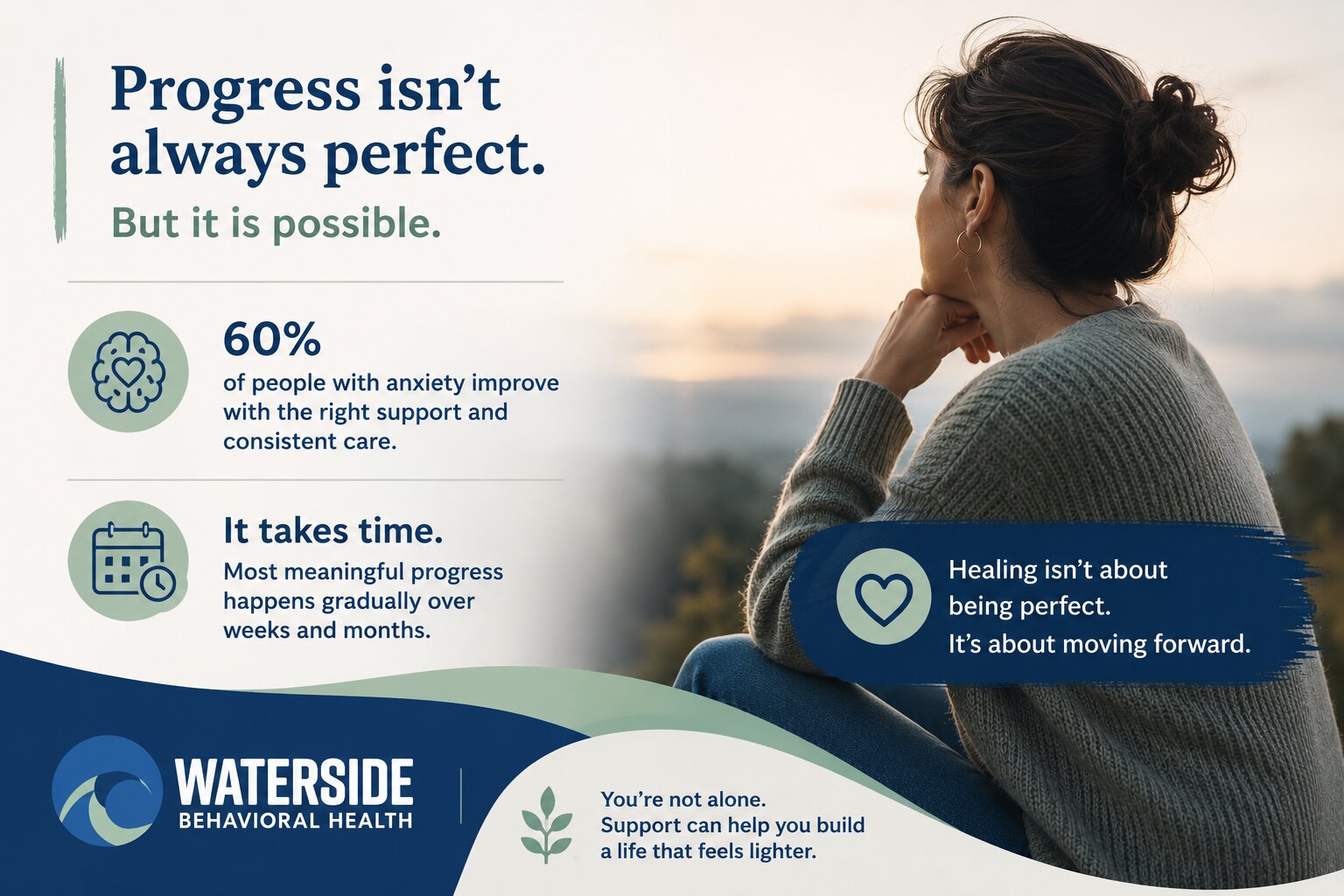
Recovery timelines vary widely. Some individuals notice improvement within weeks, while others experience gradual progress over months. Long-term improvement often develops through consistent effort and support.
Can therapy still help if I’ve already tried it before?
Yes. Previous experiences do not predict future outcomes. Different therapists, treatment approaches, and life circumstances can lead to very different results.
Does medication work immediately?
Many anxiety medications require time before their full effects become noticeable. Individual experiences vary, and medication decisions should always be discussed with a qualified medical professional.
Is it normal to still struggle with anxiety years later?
Yes. Many long-term alumni continue encountering periods of anxiety. This does not mean recovery has failed. Often it simply means another layer of growth or support may be beneficial.
Can therapy and medication be used together?
For some individuals, multiple forms of support may be considered as part of a comprehensive treatment plan. A qualified provider can help determine what approach may be most appropriate.
What if I don’t know where to start?
You don’t need all the answers before reaching out. Speaking with a mental health professional can help clarify available options and identify appropriate next steps.
Take the Next Step
If anxiety continues to affect your quality of life and you’re unsure which direction makes sense, support is available. You don’t have to carry these questions alone.
Call 774-619-7750 or visit our anxiety treatment in Massachusetts page to learn more about our mental health treatment in Massachusetts, anxiety treatment services in Bristol County, MA.