

The first panic attack often changes people.
Not because it hurts physically forever — although it can feel terrifying in the moment — but because afterward, many people stop trusting their own body.
A racing heart suddenly feels dangerous. Dizziness feels alarming. Tightness in the chest becomes something to monitor constantly. People start scanning themselves for signs that another episode might happen again.
For some, the fear fades.
For others, it quietly takes over daily life.
At Waterside Behavioral Health, we meet many people who aren’t sure what they’re experiencing anymore. They wonder whether it’s panic attacks, generalized anxiety, chronic stress, burnout, trauma, or something deeper they can’t explain yet.
Most of them are exhausted long before they reach out.
They’ve spent months trying to calm themselves down privately. Googling symptoms late at night. Avoiding situations that trigger discomfort. Telling themselves they’re overreacting while secretly feeling scared all the time.
And many people searching for treatment options in Massachusetts are not looking for perfection.
They’re looking for relief.
For clarity.
For one calm conversation that finally helps things make sense.
That’s often where therapy begins.
Panic Attacks Can Feel Like Emergencies
One reason panic attacks are so frightening is because the symptoms feel intensely physical.
People describe:
- Racing heartbeat
- Shortness of breath
- Dizziness
- Tingling sensations
- Sweating
- Chest pain
- Nausea
- Feeling detached from reality
- Feeling like they might faint or lose control
Some people genuinely believe they’re dying during their first panic attack.
Others end up in emergency rooms convinced something is medically wrong — only to be told their symptoms may be anxiety-related.
That can feel confusing in its own way.
Because even after hearing “it’s anxiety,” many people still think:
“But it felt real.”
It was real.
The fear was real.
The physical symptoms were real.
The nervous system response was real.
That’s important to understand.
Panic attacks are not “attention-seeking.” They are not weakness. And they are not something people simply choose to stop having.
A therapist helps people understand what’s happening inside the body so the fear itself becomes less overwhelming over time.
Anxiety Often Looks Different Than People Expect
Not everyone with anxiety has dramatic panic attacks.
In fact, many people with anxiety appear highly functional on the outside.
They go to work.
Take care of families.
Show up socially.
Meet deadlines.
Meanwhile internally, they may feel like their nervous system never fully powers down.
Anxiety can look like:
- Constant overthinking
- Trouble relaxing
- Difficulty sleeping
- Irritability
- Muscle tension
- Fear of disappointing others
- Feeling “on edge” all the time
- Avoiding situations that feel overwhelming
- Replaying conversations repeatedly afterward
Some people don’t even realize they’re anxious because they’ve lived that way for so long.
They think exhaustion is normal.
Hypervigilance is normal.
Mental spiraling is normal.
One patient once described anxiety this way:
“It felt like my brain always had twenty tabs open, and I couldn’t figure out which one was making noise.”
That’s the kind of confusion therapy can help untangle.
The Fear of “Losing Control” Keeps Many People Silent
A lot of people struggling with panic or anxiety are deeply afraid to talk about it.
They worry:
- “What if people think I’m unstable?”
- “What if I sound dramatic?”
- “What if something actually is medically wrong?”
- “What if therapy confirms my worst fears?”
So instead, they try to manage it quietly.
They cancel plans without explaining why. They avoid crowded places. They stop driving certain routes. They carry water bottles, medications, headphones, or exit plans everywhere “just in case.”
Over time, anxiety can start shaping a person’s entire life without them fully realizing it.
That’s one reason therapy matters.
Not because a therapist immediately “fixes” anxiety — but because fear loses some of its power when someone no longer has to carry it alone.
A Therapist Helps Separate Panic From Danger
One of the most important parts of therapy is helping people understand the difference between discomfort and actual danger.
For someone experiencing panic attacks, the body often reacts as though there’s a threat even when there isn’t one physically present.
The nervous system shifts into survival mode:
- Heart rate increases
- Breathing changes
- Muscles tense
- Adrenaline surges
And because those sensations feel intense, the brain starts fearing the sensations themselves.
That cycle can become exhausting.
A therapist helps interrupt that fear loop gradually and safely.
This often includes:
- Learning how panic works biologically
- Identifying triggers or patterns
- Recognizing catastrophic thinking
- Building grounding strategies
- Practicing nervous system regulation
- Reducing avoidance behaviors slowly over time
Therapy is not about telling someone, “Just calm down.”
Most people struggling with anxiety have already tried that.
Therapy is about helping the body and brain relearn safety.
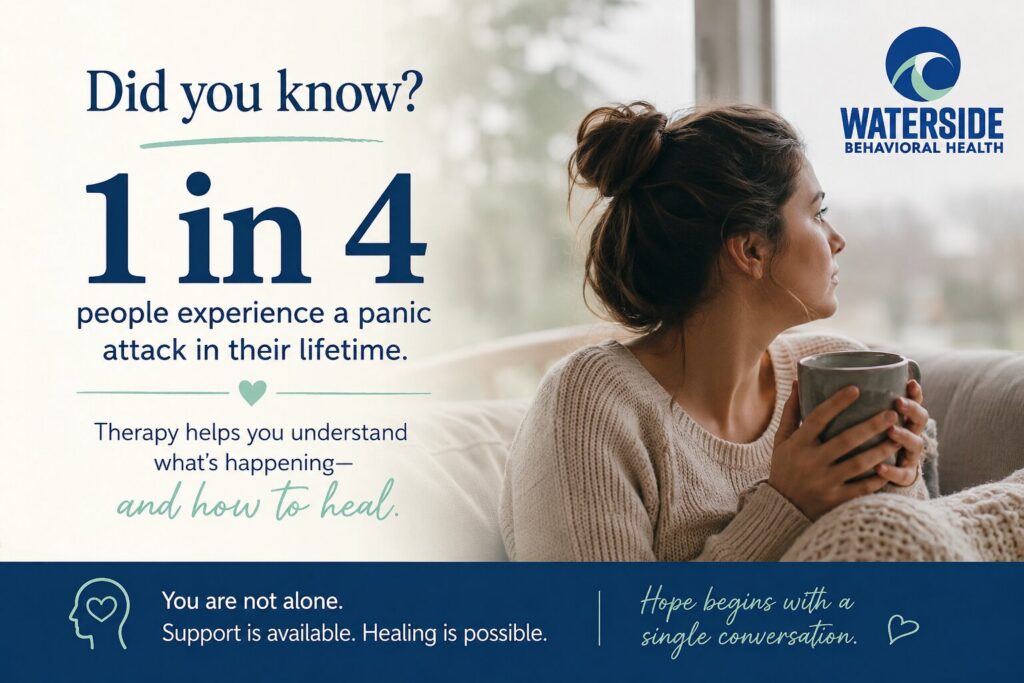
Anxiety Is Sometimes Connected to More Than Stress
Many people initially assume they’re “just stressed.”
And sometimes stress absolutely contributes to anxiety.
But therapy also helps uncover deeper layers that may be fueling symptoms:
- Unresolved trauma
- Chronic burnout
- Childhood emotional environments
- Grief
- Perfectionism
- Relationship instability
- Fear of failure
- Major life transitions
- Long-term emotional suppression
Sometimes panic attacks appear during seasons where people have been emotionally overloaded for far too long.
The body eventually demands attention.
Like a smoke alarm with overly sensitive wiring, the nervous system begins reacting loudly even to smaller stressors because it’s been under pressure for too long already.
That doesn’t mean someone is broken.
It means their system may be overwhelmed.
And understanding that difference often reduces shame tremendously.
Therapy Creates a Space Where You Don’t Have to Pretend
One of the hardest parts of anxiety is how invisible it can feel.
People often become experts at hiding it.
They smile while panicking internally.
They say “I’m fine” automatically.
They function externally while privately feeling terrified or exhausted.
Therapy creates space where that performance can finally stop.
A good therapist is not there to judge someone for struggling. They’re there to understand patterns, help create emotional safety, and support gradual healing.
For first-time treatment seekers especially, this can feel unfamiliar at first.
Many people enter therapy worried they’ll say the wrong thing or won’t know how to explain themselves clearly.
But therapy isn’t a test.
You don’t need perfect words.
You don’t need a complete understanding of your symptoms.
You don’t need to prove that your anxiety is severe enough to deserve support.
You’re allowed to ask for help simply because life feels harder than it should right now.
Treatment Can Look Different for Different People
There is no single “correct” way to treat anxiety.
Some people benefit from weekly therapy sessions. Others need more structured support during periods where symptoms become disruptive to daily life.
Treatment may include:
- Individual therapy
- Cognitive behavioral therapy (CBT)
- Trauma-informed therapy
- Mindfulness and grounding techniques
- Medication support
- Group therapy
- Structured daytime care during higher-stress periods
The goal is not to erase emotions completely.
The goal is to help someone feel more stable, present, and connected to their life again.
Many people searching for an anxiety therapist near me are not looking to become a different person. They simply want to stop living in constant fear of their own thoughts and body.
That’s a deeply human desire.
And healing is possible.
You Don’t Have to Wait Until Things Get Worse
One of the most damaging myths about mental health is that people should wait until they’re completely falling apart before seeking help.
But anxiety tends to grow in isolation.
The earlier someone receives support, the easier it can become to interrupt harmful cycles before they become deeply entrenched.
You do not need to wait until:
- You can’t leave your house
- Panic attacks become daily
- Relationships are falling apart
- Sleep completely disappears
- Work becomes impossible
- You feel emotionally numb all the time
Support is allowed before crisis.
Actually, that’s often when therapy helps most.
At Waterside Behavioral Health, we understand how vulnerable it can feel to ask for help for the first time. Whether you’re experiencing panic attacks, chronic anxiety, emotional burnout, or a constant sense of overwhelm, compassionate care in Massachusetts and evidence-based support in Massachusetts are available.
You do not have to figure this out alone.
FAQ: Panic Attacks, Anxiety, and Starting Therapy
What’s the difference between a panic attack and an anxiety disorder?
A panic attack is usually a sudden episode of intense fear or physical distress. An anxiety disorder involves ongoing patterns of excessive worry, fear, or nervous system activation that interfere with daily life. Some people experience both.
Can anxiety cause physical symptoms?
Yes. Anxiety commonly causes physical symptoms including chest tightness, dizziness, nausea, racing heartbeat, muscle tension, headaches, fatigue, and shortness of breath.
Why do panic attacks feel so scary?
Panic attacks activate the body’s fight-or-flight response, which creates intense physical sensations. Because the symptoms feel sudden and overwhelming, many people fear they are in danger even when they are not.
How does therapy help with panic attacks?
Therapy helps people understand triggers, reduce fear around physical sensations, identify thought patterns, and build coping tools that help regulate the nervous system over time.
What if I don’t know how to explain what I’m feeling?
That’s okay. Many people start therapy feeling confused or overwhelmed. A therapist helps guide the conversation and create clarity gradually.
Do I need medication for anxiety?
Not always. Some people improve significantly through therapy alone, while others benefit from combining therapy with medication support. Treatment should always be individualized.
Can anxiety get worse if untreated?
It can. Anxiety often grows through avoidance and chronic stress. Early support may help prevent symptoms from becoming more disruptive over time.
Is it normal to feel nervous about starting therapy?
Absolutely. Many first-time clients feel anxious about opening up or unsure what to expect. Feeling nervous does not mean therapy is wrong for you.
What type of therapy helps anxiety most?
Several approaches can help, including cognitive behavioral therapy (CBT), trauma-informed therapy, mindfulness-based approaches, and other evidence-based treatments depending on the individual’s needs.
How do I know if it’s time to reach out for help?
If anxiety, panic, fear, or emotional overwhelm are affecting your daily life, relationships, sleep, or sense of well-being, it may be time to speak with a professional. You do not need to wait until things become unbearable.
Call 774-619-7750 or visit our mental health treatment in Massachusetts, anxiety treatment in Massachusetts to learn more about our mental health treatment in Bristol County, MA, anxiety treatment services in Plymouth, MA.