

Panic attacks can make ordinary life feel strangely unsafe.
A crowded train. A meeting at work. Standing in line for coffee. Even relaxing at home can suddenly feel impossible when your body flips into panic without warning. Your chest tightens. Your thoughts race. You start wondering if something is seriously wrong with you.
And after enough of those moments, life can quietly start shrinking around the fear.
If you’ve been searching for answers — especially things like “best therapy for panic attacks near me” — there’s a good chance you’re not looking for perfection. You’re looking for relief. You want to feel grounded again. You want your brain and body to stop acting like danger is everywhere.
The good news is that panic attacks are treatable, and many people find real relief through compassionate care in Massachusetts. The process doesn’t have to feel cold, clinical, or overwhelming. In many cases, it starts with one honest conversation.
Panic Attacks Can Change the Way You Move Through the World
One of the hardest parts about panic attacks is how invisible they can be.
From the outside, people may think you’re functioning normally. You still go to work. You answer texts. You show up to dinner. But internally, you’re constantly monitoring yourself.
You notice every heartbeat.
Every dizzy feeling.
Every strange sensation in your body.
You begin planning around panic without even realizing it.
Maybe you sit near exits everywhere you go. Maybe you avoid highways now. Maybe you cancel plans because you’re afraid of having an attack in public. Some people stop exercising because increased heart rate feels triggering. Others start relying on alcohol or isolation just to calm their nervous system down temporarily.
That’s why panic attacks can feel so exhausting. You’re not only dealing with moments of fear. You’re dealing with the anticipation of fear all day long.
It’s like your nervous system forgot how to stand down.
The Best Therapy Often Feels More Human Than Clinical
A lot of people delay therapy because they’re afraid of being judged, analyzed, or treated like a diagnosis instead of a person.
That fear makes sense.
Especially for people who are sober curious or emotionally overwhelmed already, the idea of walking into treatment can feel intimidating. Some worry therapy will feel sterile or impersonal. Others worry they’ll be told they’re “too anxious,” “too emotional,” or somehow failing at life.
Good therapy shouldn’t feel like that.
The best therapy for panic attacks often starts with helping someone feel safe enough to stop fighting their own body. A skilled therapist understands that panic isn’t weakness. It’s a nervous system that has been overloaded for too long.
That perspective matters.
When people begin exploring anxiety therapy Boston options, they’re often searching for more than symptom management. They want someone who can help them reconnect with themselves without shame or pressure.
Because underneath the panic, many people are grieving something deeper:
The version of themselves that used to feel calm, spontaneous, social, or free.
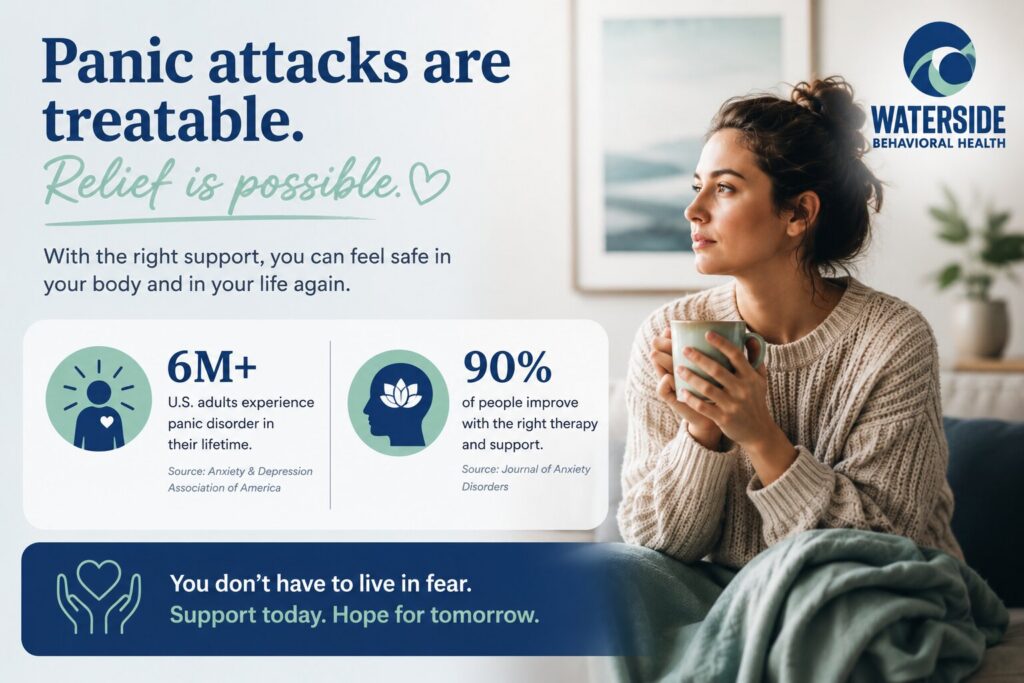
Different Therapy Approaches Work for Different People
There isn’t one perfect therapy style for everyone.
Some people respond well to structured approaches like cognitive behavioral therapy (CBT), which helps identify thought patterns that fuel panic. Others benefit from therapies focused on nervous system regulation, mindfulness, trauma processing, or emotional awareness.
What matters most is finding an approach that feels supportive and sustainable for you.
For example, CBT can help people recognize how catastrophic thinking keeps panic cycles alive. A person might feel their heart race and immediately think, “Something terrible is happening.” Therapy helps interrupt that spiral before it escalates.
Other therapeutic approaches focus more on helping the body feel safe again.
That can include:
- Breathing and grounding techniques
- Learning how panic physically works
- Reducing avoidance behaviors
- Building emotional tolerance slowly over time
- Addressing chronic stress or unresolved emotional experiences
Sometimes therapy also includes medication support, especially if panic attacks have become severe or disruptive to daily life. For many people, medication is not about “changing who you are.” It’s about lowering the volume enough for healing work to become possible.
A good therapist won’t force one path on you. They’ll collaborate with you.
Why Panic Attacks Often Make People Feel Disconnected From Themselves
Panic has a way of making life feel smaller.
Not just physically — emotionally too.
You may stop trusting yourself. You second-guess your reactions. You become hyperaware of every sensation in your body. Things you used to enjoy can start feeling distant or difficult.
A lot of people describe it this way:
“I don’t even feel like me anymore.”
That sentence carries more grief than most people realize.
Because panic attacks don’t just create fear. They can chip away at confidence, identity, and connection over time. The world starts revolving around staying safe instead of actually living.
And if substances like alcohol became part of coping with stress or anxiety, things can become even more confusing. Many sober curious people notice that alcohol initially feels calming but eventually increases anxiety, emotional sensitivity, and panic symptoms afterward.
That realization can feel scary at first.
But it can also become the beginning of something healthier.
Not punishment. Not restriction. Just clarity.
Therapy Isn’t About Becoming Emotionless
One of the biggest misconceptions about therapy for panic attacks is that it will somehow flatten your personality.
People worry:
- “What if I lose my edge?”
- “What if I stop feeling like myself?”
- “What if treatment changes me?”
In reality, many people experience the opposite.
As panic decreases, they often feel more emotionally available, more creative, more connected, and more present. Energy that once went toward surviving can finally go somewhere else.
Relationships improve because conversations aren’t constantly filtered through anxiety. Sleep gets better. Social situations become manageable again. Some people rediscover hobbies, routines, and parts of themselves they thought were gone forever.
Healing doesn’t erase personality.
It usually reveals the parts of you panic had been covering up.
What to Look for in a Therapy Program
Finding the right support can feel overwhelming, especially around the Boston area where there are so many options. But you don’t need to find the “perfect” program immediately.
Start by looking for a few important qualities:
A Calm, Nonjudgmental Environment
You should feel emotionally safe asking questions and being honest about your experiences.
Therapists Who Explain Things Clearly
Panic feels less terrifying once you understand what’s happening physically and emotionally.
Flexible Levels of Support
Some people benefit from weekly therapy sessions. Others may need more structured daytime care for a period of time.
Personalized Treatment
Good therapy should adapt to your life, your goals, and your emotional needs.
Real Human Connection
You should feel seen as a person — not managed like a checklist.
Sometimes the most healing thing isn’t hearing someone say, “You’re fine.”
It’s hearing someone calmly say, “I understand why this feels frightening.”
Small Signs You’re Healing Matter More Than You Think
Healing from panic attacks usually doesn’t happen all at once.
It often starts quietly.
You drive a route you’ve been avoiding.
You stay at dinner a little longer than usual.
You notice your heartbeat speeding up — and don’t immediately spiral.
You laugh during a conversation instead of monitoring yourself the entire time.
These moments matter.
Because recovery is rarely about becoming fearless. It’s about rebuilding trust with yourself little by little.
Like teaching your nervous system that the world is no longer an emergency.
FAQ About Therapy for Panic Attacks
How do I know if I need therapy for panic attacks?
If panic attacks are affecting your daily life, relationships, work, sleep, or sense of safety, therapy can help. You don’t have to wait until things become unbearable before reaching out.
What type of therapy works best for panic attacks?
Many people benefit from cognitive behavioral therapy (CBT), mindfulness-based therapy, or approaches focused on nervous system regulation. The best therapy depends on your symptoms, history, and personal comfort level.
Can panic attacks go away completely?
For many people, panic attacks become far less frequent and intense with proper support. Some people stop experiencing them altogether. Others learn how to respond to panic without fear controlling their lives.
Is medication required for panic attack treatment?
Not always. Some people improve through therapy alone, while others benefit from combining therapy with medication support. Treatment should be personalized to your needs.
Can alcohol make panic attacks worse?
Yes. While alcohol may temporarily feel calming, it can increase anxiety and panic symptoms later, especially during withdrawal or emotional crashes afterward. Many sober curious individuals notice a strong connection between drinking and heightened anxiety.
How long does therapy for panic attacks usually take?
Everyone’s timeline is different. Some people notice improvement within a few months, while others benefit from longer-term support. Progress often depends on symptom severity, stress levels, and consistency with treatment.
What if I’m nervous to start therapy?
That’s extremely common. Many people feel anxious before their first appointment, especially if panic already makes unfamiliar situations feel overwhelming. A compassionate therapist will understand that and help you move at a pace that feels manageable.
You Deserve to Feel Safe in Your Own Life Again
If panic attacks have started shaping your routines, relationships, or sense of self, you don’t have to keep carrying that fear alone. Compassionate help in Massachusetts is available for people trying to feel steady, clear, and emotionally connected again.
Call 774-619-7750 or visit our care in Massachusetts to learn more about our mental health treatment in Massachusetts, anxiety treatment services in Plymouth, MA.