
You didn’t plan to ghost your treatment program. You told yourself you just needed a week off. Then one day turned into three. You skipped a group. Dodged a call. Told yourself you’d go next time—and then the guilt set in.
Now you’re sitting here, wondering if it’s even okay to come back. The short answer? It is.
You’re not a failure. You’re not disqualified. And you’re not alone.
This blog is here to help you return to mental health treatment without shame—and remind you that walking back in doesn’t mean you failed. It means you’re still fighting for yourself.
It Happens More Than You Think
You’re not the only one who left early. Not even close.
People pause treatment for all kinds of reasons:
- The schedule got overwhelming
- Emotions hit too hard, too fast
- Insurance issues or rides fell through
- The energy just… ran out
Sometimes it’s the program. Sometimes it’s life. Sometimes it’s just you needing space. That’s not something to be embarrassed about. That’s human.
Leaving doesn’t mean you “wasted” your time. It means something wasn’t quite aligned. The good news? You get to try again—with more clarity this time.
Shame Is the Hardest Part of Coming Back
The actual logistics of returning? Usually pretty simple.
It’s the mental noise that’s the killer:
- “They’re going to think I didn’t care.”
- “I can’t go back after bailing.”
- “Everyone else probably finished—what if I’m behind?”
Let’s cut through the noise: none of that disqualifies you.
No one’s sitting in a staff meeting gossiping about how you missed Week 5. No one’s going to hand you a lecture or a guilt trip.
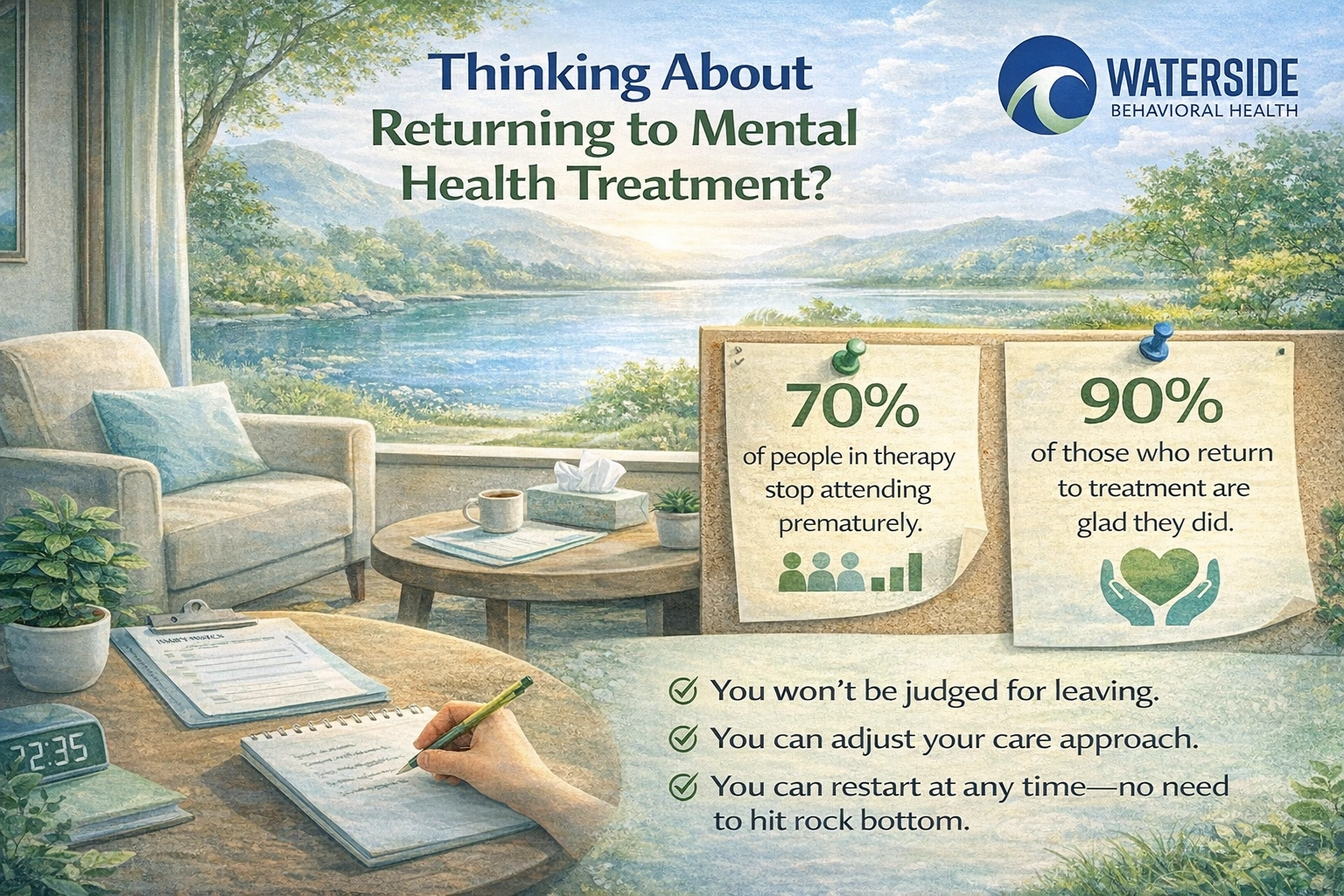
If you walked out, you can walk back in.
You Don’t Need to Start Over From Zero
One of the biggest myths is that leaving treatment resets everything.
Not true.
You might have to re-engage in an assessment or reconnect with a clinician, sure—but that’s not square one. That’s continuing the work with more honesty, more self-awareness, and a better sense of what support you actually need this time around.
Returning to care doesn’t mean erasing the past. It means reclaiming it and choosing to keep going.
Some clients who returned to mental health services in Plymouth County, MA said they felt more grounded the second time around—not because the program changed, but because they did.
You’re Allowed to Ask for a Different Setup
Let’s be real: sometimes treatment didn’t work because it wasn’t the right fit.
You’re allowed to say that.
You’re allowed to say, “Group therapy was too much for me,” or “I wish I’d had more one-on-one support,” or “I didn’t connect with my last therapist.”
Coming back doesn’t mean signing up for the exact same thing. It means telling the truth about what did or didn’t help—and finding what might feel better this time.
If something was missing before, this is your chance to say so. We’re not trying to make you squeeze into a mold. We’re trying to meet you.
You Don’t Owe Anyone a Perfect Comeback
There’s no redemption arc required to re-enter care.
You don’t have to prove your readiness. You don’t need to rehearse a speech. You don’t need to walk in and say, “I’m back and better than ever!”
You can walk in shaky. Confused. Hesitant. Ashamed. You can say, “I’m not sure what I need—but I think I need something.” That’s more than enough.
Mental health treatment isn’t about showing up polished. It’s about showing up at all.
This Time, You Know More Than You Think
When you’ve already done part of a program—or even just dipped your toe in—it gives you intel. Now you know:
- What parts felt helpful
- What didn’t
- What tripped you up
- What scared you off
- What might work better
You’re not starting from scratch. You’re starting from experience.
Some people who returned to mental health services in Bristol County, MA found that re‑entry felt more empowering because they came in with a clearer voice.
They weren’t lost. They were just ready for more honest support.
You Don’t Need a New Rock Bottom
Let’s kill this myth right now: You do not need things to get worse before you earn the right to come back.
You don’t need to spiral. You don’t need another meltdown. You don’t need to let the guilt or sadness or anxiety snowball just to feel “worthy” of care.
If you’re thinking about returning—even quietly, even hypothetically—that’s your signal.
Healing doesn’t need a plot twist. It just needs a next step.
How to Come Back (Even If It Feels Awkward)
Let’s make this easier. Here are some real things people have said when returning to treatment:
- “Hey, I think I’m ready again. Can I come back?”
- “I left before, but I want to try a different approach this time.”
- “It was too much back then. I want to give it another shot.”
- “I don’t know how to explain everything, but I need help.”
Say what feels true. That’s it. You don’t need a script.
And if you’re not sure what to say? Just say that.
FAQ: What If I Want to Come Back to Treatment?
Will I be judged for leaving?
No. People leave and come back all the time. It’s part of the process, not a failure.
Do I have to start the same program over again?
Not necessarily. You can explore new formats or levels of care that better fit your current needs.
What if I left because I felt overwhelmed?
That’s valid. We can talk about ways to reduce pressure and adjust expectations.
Can I switch therapists or group tracks?
Yes. Your comfort and connection matter. You’re not locked into what didn’t work.
I’m not sure if I’m ready—should I still reach out?
Absolutely. Curiosity counts. You can have a conversation without committing.
Let This Be the Sign You Were Waiting For
You clicked this post for a reason.
You’ve been thinking about returning. Or wishing you could. Or missing the support. That means something.
You don’t have to carry guilt before you can accept grace. You don’t have to feel certain before you take action. You just have to want more than the stuck place you’ve been in.
And if you’re looking for help in Massachusetts that doesn’t make you explain your way back into care—Waterside is ready.
Want to Return Without the Pressure?
Call 774-619-7750 to learn more about our mental health treatment in Massachusetts.
You’re not behind. You’re still on your path.